
Chapter 7
Part 3
With the last stone fresh in your mind, let’s delve deeper into some of the repeating design patterns frequently observed with these stones.
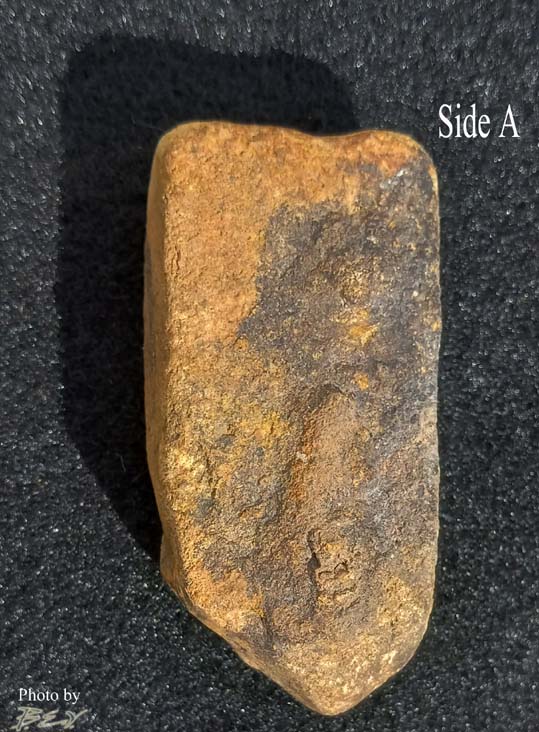
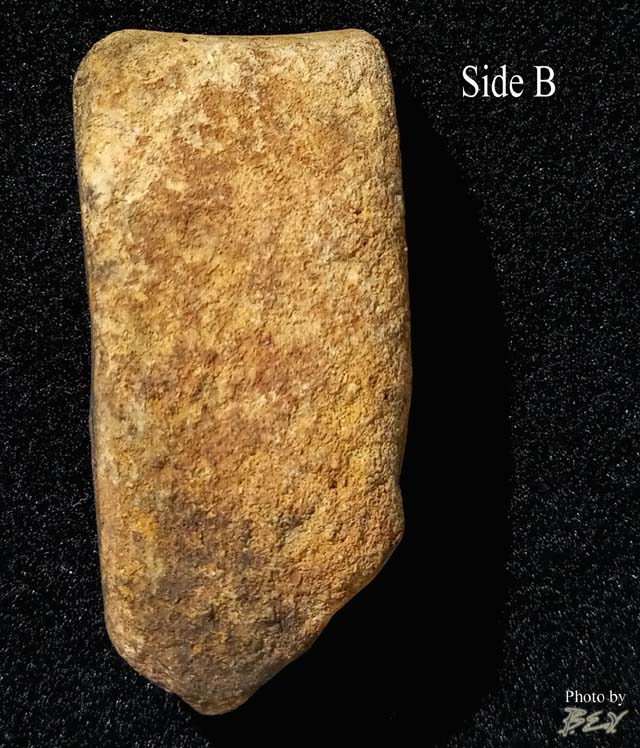
Above is a stone that combines and displays design patterns we’ve seen previously. The angular dimensions of this stone are nearly identical to that of the last piece. Its size, shape, and two slightly squared corners, on the other hand, resembles the three stones that were pictured along side modern domino game pieces (see Chapter 6, Part 3). Pay attention to the subtle differences between sides A and B. Notice that Side A has a brownish-tan color, whereas Side B has a lighter whitish-brown hue. On Side A give attention to the black banding this stone displays. Although it is considerably faded, it still provides us with a clue as to how to view this piece in its proper perspective. Why? Because as stated, black banding (pigmentation) is most often found in relation to facial depictions. So, although a facial image may not be clearly visible now, I’m certain that when this stone was created that was not the case. In fact, when you know what to look for, traces of facial images can still be gleaned from this piece. Before that, let’s look at the measurements of this stone. This stone is 2.0 inches (5.08 cm) long, is 1.0 inch (2.54 cm) wide, is 0.5 inches (1.27 cm) thick and weighs 14.4 grams. Beyond size there is a distinct difference between this and the former stone. Unlike the uniform, offset layers seen with the larger iron-ore piece, this smaller stone is composed of a slightly rough and granular type of terracotta. Below the two stones are pictured side-by-side so that you can visually compare them 👌.
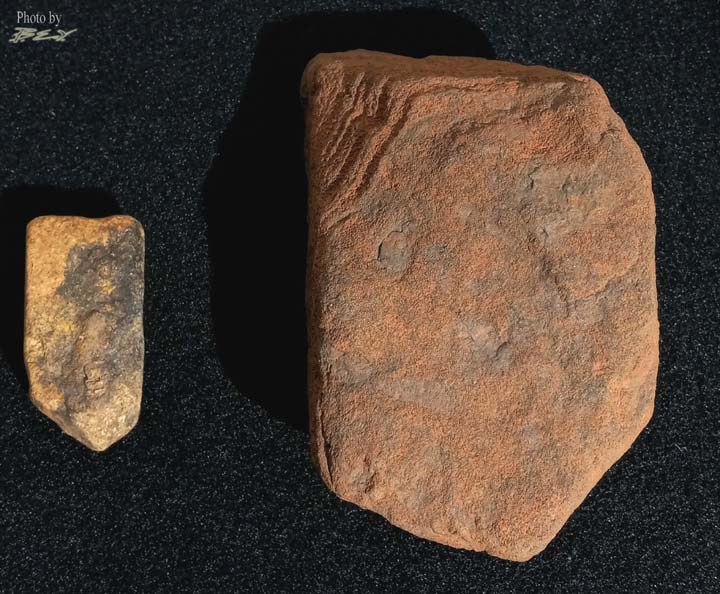
Once visually compared the resemblance in the design of these stones is clear. Coincidence? Highly unlikely, especially when you consider that these two pieces were produced from two very different lithic materials. Question… Could the repeated angular design pattern you see also be based on a standard template design? Maybe, just maybe 🤔. As for the facial depictions that can still be seen on this stone, I’ve provided detailed pictures below.
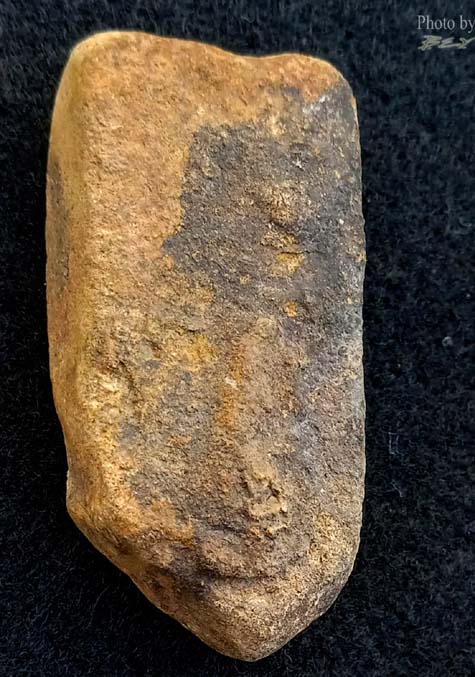
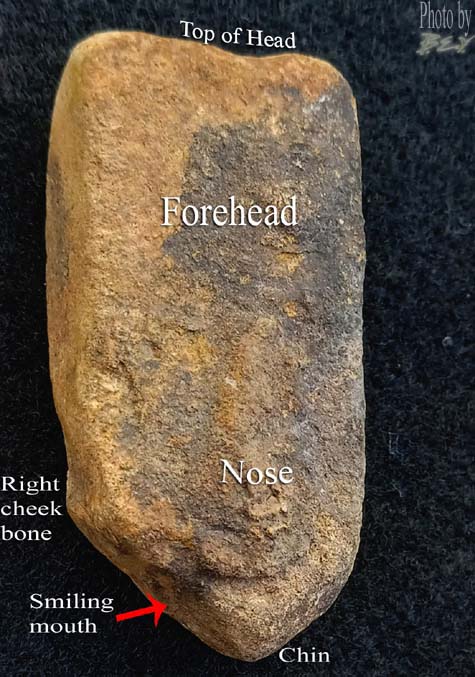
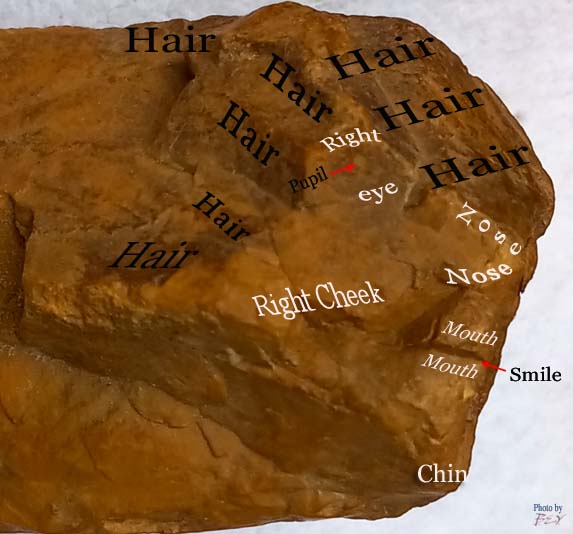
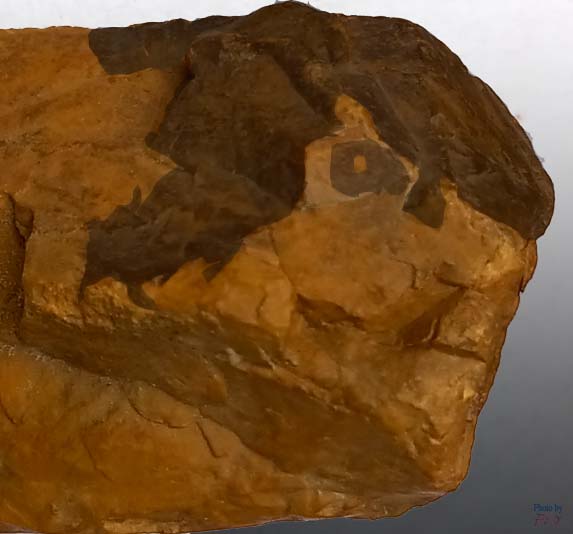
With a slight shift to the left, a barely distinguishable image comes into view. To locate the face we’ll use a built-in orientation point. Which one? The one that I’m about to reveal 😃. In this example it’s a simple smile. What smile, you ask? Great question. The one that is formed just above the most angular point on this stone. How do I know that this is really a smile? Simple. Just like the nine 9⃣ repeated styles, the repeated shapes, the repeated shadows, and the repeated symbols these stones display, they also feature repeated facial expressions. Among them are happiness 🙂, sadness 😔, excitement 🤩, fear 😱, ambivalence 😏, anger 😡, and shock 🤯. Or simply put, these stones display the full gambit of human emotions. In this example, the smile is depicted in the same broad “U” shape seen on the smiling emoji. Which of course is the same shape our own mouths form we we smile ☺. Interesting, huh? At any rate, this smile gives us the ability to locate this character’s rounded cheeks and elongated head. I’ve diagramed these facial features in the photo on the right. See if you can discern where the eyes 👀 would have been located. In order to do so, all you must do is trust your own eyes. I’m sure you can do it 😀.
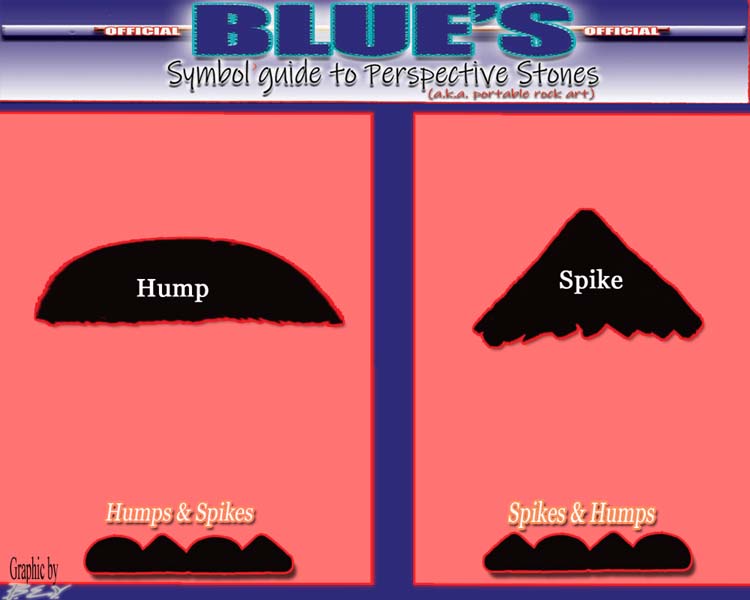
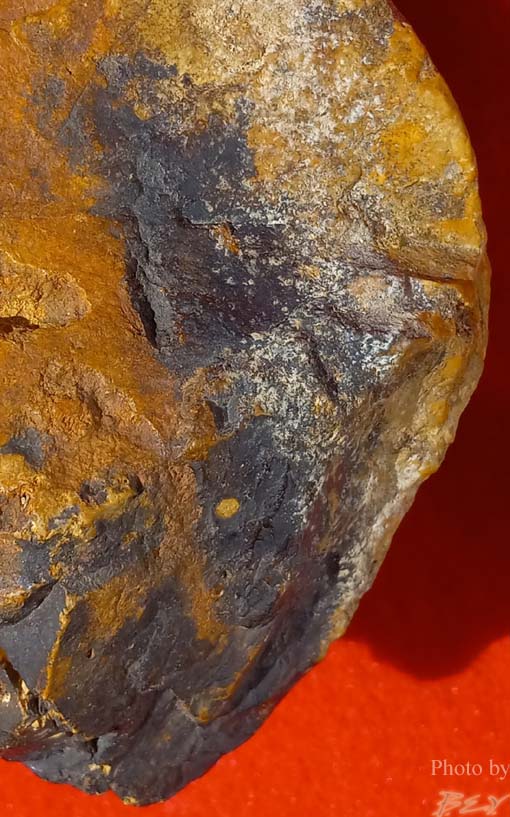
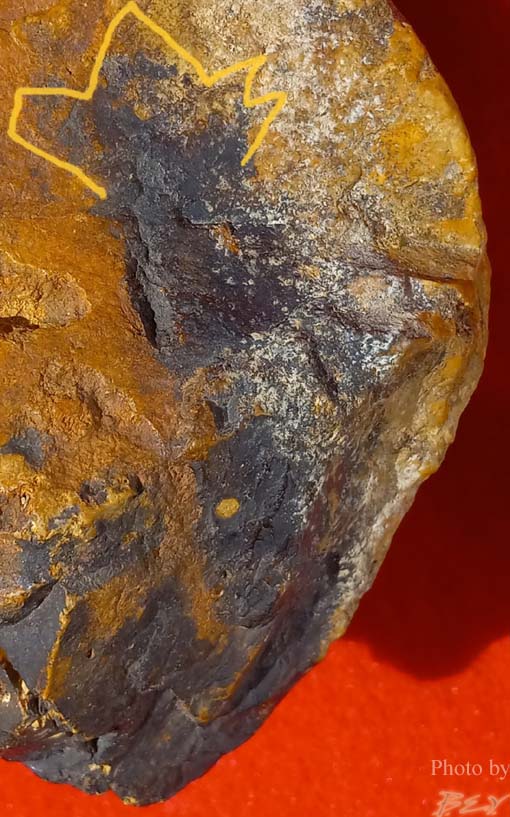
I’m about to show you another face that’s present on this stone. It’s design relies almost exclusively on its banding. Since the black banding is key here, there’s a couple of things I’d like for you to look for in its intricate design. We’ll call them “humps and spikes“. And, if you do see any “spikes”, consider whether any remind you of any of the basic language symbols seen on the symbol guide. Remember, symbols have no fixed orientation. They may appear in any direction. Be sure to recheck the last image as well 👍.
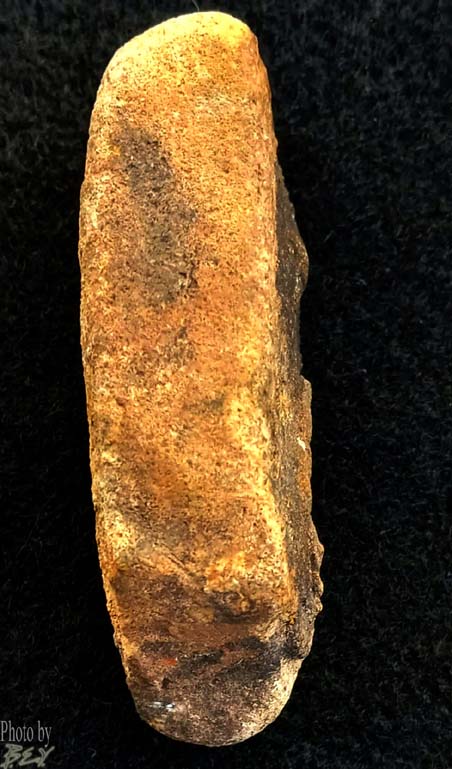
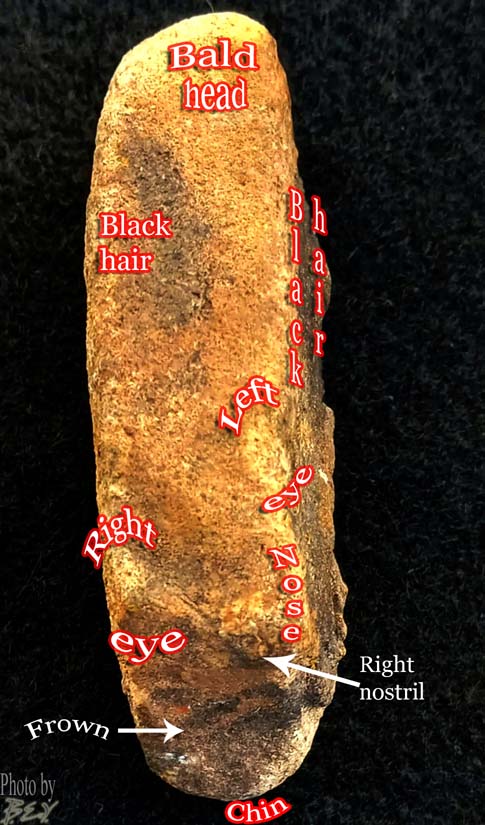
This face is visualized by turning the stone on its left side. How do we know that this is really a face we’re seeing. Simple. Because of what we know about the built-in orientation points these stones possess. In this example there are two. The first is the observable contrast in the pigments seen. This gives us a concrete way to find the eyes. The second is the black banding itself.
Which, as has been repeatedly stated, often can be seen in conjunction with facial depictions. With these two facts in mind, we can easily and quickly locate both eyes 👀, the nose, open mouth, chubby or rounded right cheek, and elongated, mostly bald head. As you analyze this piece consider two things. First, if the eyes were sometimes designed to reflect something that was actually seen, what does the shape of these eyes tell us? Second, don’t neglect this stone’s micro detailing. With the intentional use of black banded patterns in mind, consider what can be seen inside the right nostril of this person 🤔. There’s no doubt that you’ll be amazed.
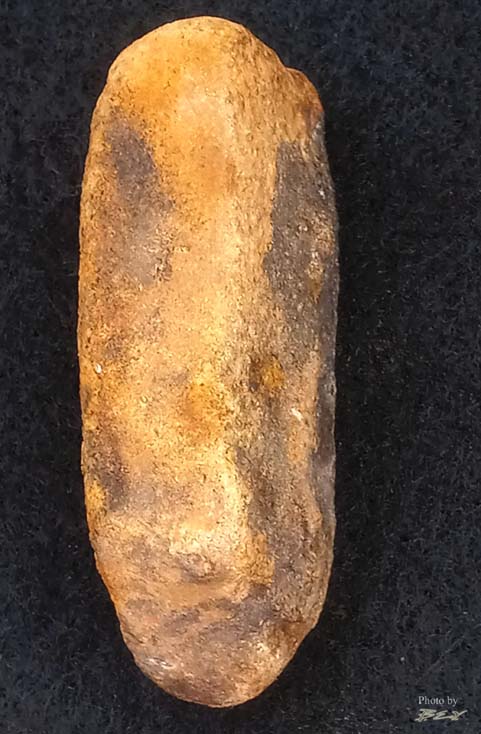
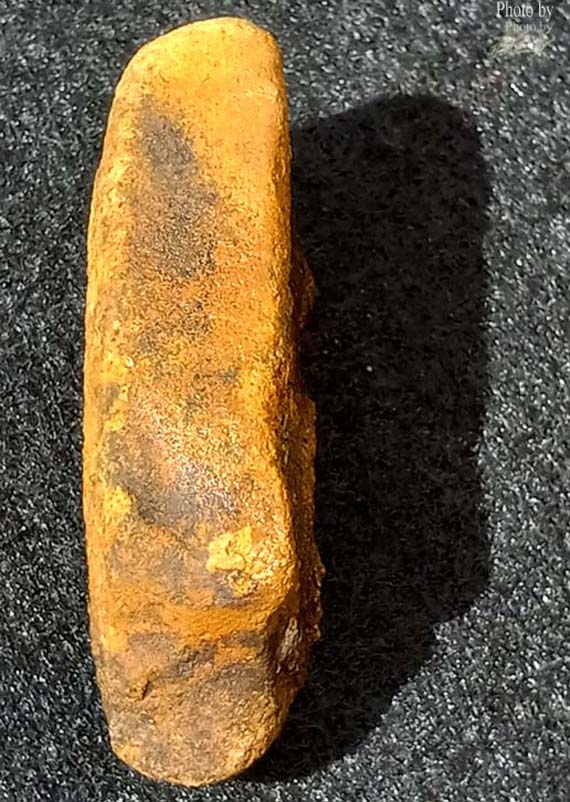
Here I’ve provided you with two additional views of the same stone. On the left the face is seen from a frontal view. From this perspective you can better observe how the black banded patterns form downward 👇 flowing undulating locks of hair. On the right side of the face, the hair is seen partially covering the right eye. This contrast in colors is what makes the easy visualization of this eye possible. On the left side of the face no definitive eye 👁️ can be seen. Either it is intended to be understood that this eye is missing (as seen with many other stones), or like the right eye, perhaps from this perspective it is merely covered by the hair. Something I am certain about is the variant of the mother symbol (Genitrix Symbolum) that is used here. Did you miss it? Well someone hasn’t been paying attention 😔. Look below the left nostril. It’s incorporated into the banding that forms the mouth. For a reference compare it to a variation appearing on the symbol guide. Here the symbol is inverted and has additional spikes.
Have you thought about the color symbolism represented by the black banding on the last stone? If not you definitely should. Why? Because it’s color alone symbolically tells us that the message attached to this piece involves either smoke, burning or both. So what’s the message or narrative attached to this piece? Simple. Someone looked up in the sky and saw something that was round, whitish-orange, and with tail trailing behind in the sky. As a result they were exposed to “humps and spikes“. Sound odd? It shouldn’t if you take the banding pattern into account. Why? Because you already know what the “humps” represent. It’s the “humped” or rounded part of the bad air symbol. Typically, whenever the bad air symbol is combined with other symbols, it is this “humped” or curved portion of the symbol that is used. So, substitute “humps” for bad air. Does the message make more sense? We are informed that someone was exposed to bad air and “spikes“. What do the spikes mean? Well, you’re going to have to wait just a minute before I tell you that 😁.
Next we’ll look at a stone that also combines repeated design patterns. This piece is superb not only in craftsmanship, but also in the applications of outer stone layering and black banding. While it’s not completely intact, it’s close. And, what it helps to reinforce is the fact that many of these stones are not naturally occurring. First, the measurements. The piece is 4.5 inches (11.43 cm) long, 3.0 inches (7.62 cm) wide, 2.25 inches (5.75 cm) thick, and weighs 1.222 pounds (545.5 grams). A decent size I would say. Now comes the photos 😃.
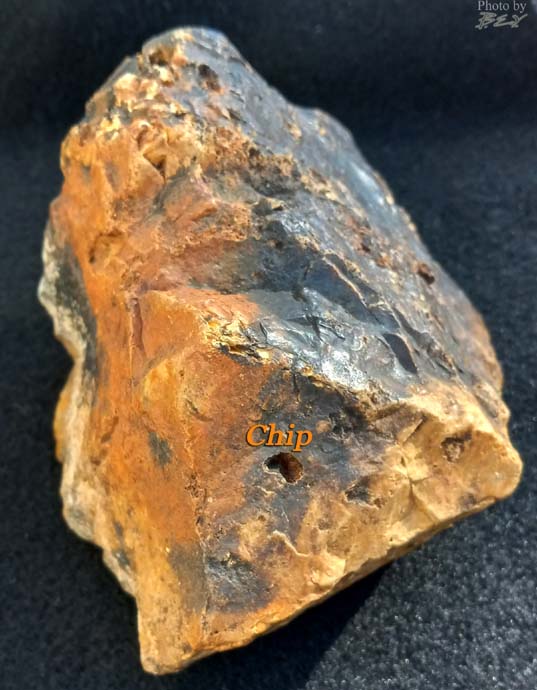
In the picture 📸 on the left, what’s immediately noticeable is just how “angular” the front of this stone is. We can also take note of how similar in appearance this section is as compared to the two previous stones. From a basic knowledge of geology we can easily assess that the shape of stone is not “naturally occurring”. But, the angular shape of the front this stone is not the only thing that let’s us know that this stone was intentionally manufactured. Some time ago, I said that when erosion and other types of damage are present, at times, it can be useful in analyzing a stone. That’s the case with this piece. What do I mean? Take note of the small chip seen near the center of the angular section. Because of this small chip, upon closer inspection, we can see what’s at the core of this piece. What is it? A type of course, reddish-purple, terracotta that is frequently seen with these types of stones. Don’t forget, I told you early in our discussion (Chapter 3, Part 1) that many of these stones employ a construction method that includes a terracotta base stone being covered with an outer stone casing. That is precisely what you are seeing now. Stunning, simply stunning 😯! This repeated construction method precludes the possibility that this stone could be… say it with me, “naturally occurring”. That is to say, nature does not produce stones like this.
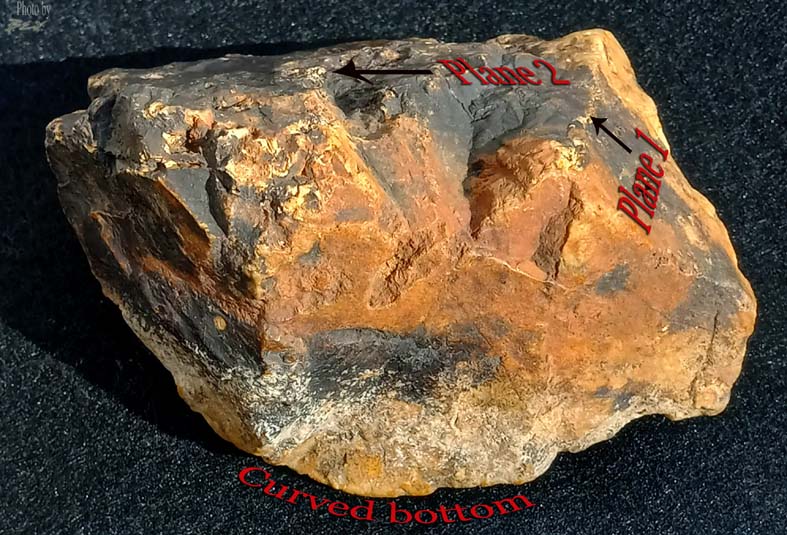
In the photo on the right we can observe that, like some of the stones shown to you earlier in this chapter, this piece is also Biplanar in style. Also, in the photo on the right, we can better see this stone’s curved, slightly rounded, bottom. As I’ve shown you, this too is a repeated design feature. Here, it may be telling us that this is a “rocker” type stone. Or, it could also represent a rounded or chubby cheek belonging to a face. If I were a betting person, and I’m not, I would say both. Then again, I’ve spent decades studying the many repeating design patterns and features that these stones display ☺️.
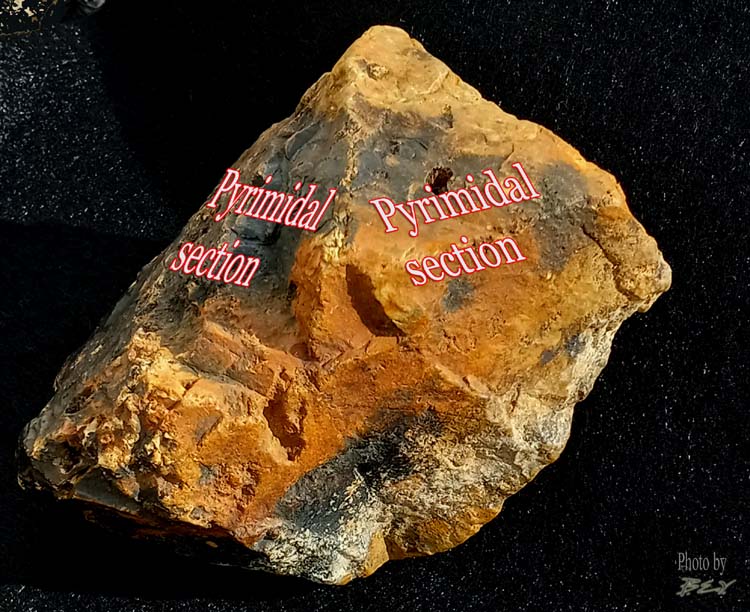
From this angle (photo on the left) we can see that this piece also features a pyramidal section. Question… Would it surprise you to know that the pyramidal shape above is another repeated design pattern oftentimes seen with these types of stones? Well, it is. Not only that, but this shape may also be based on another standard template design. How cool 😎 is that?
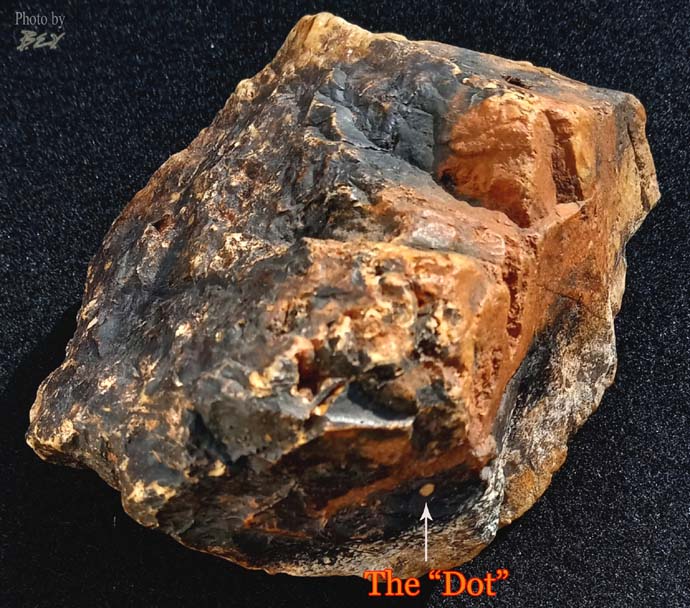
In the photo on the right I want you to focus in on the primary color of this stone. Why? Because it serves as the skin tone or complexion of the faces you’ll be seeing. Also, take note of the different color pigments that were used. The black is the most dominant, but the contrasting limestone white is equally impressive in how it was gently applied. Something else worth paying attention to is the small circular yellowish-white dot that is seen. What’s the big deal? Well, what you are looking at is a repeated design feature frequently seen on these stones. In most cases, tiny circular dots like the one seen are used to create or represent eyes. These little dots may be found in a variety of colors that sometimes symbolically give context as to what an individual saw. For example, if the circular dot is yellowish-white as seen here, one might conclude that something with the same shape and color was actually seen by someone. Similarly, a circular black dot would represent the same concept, something circular and black that was actually seen 🌑. Do you follow my meaning? If not, let’s try it another way. Let’s say that a small red dot was used to create an eye 👁. The placement of the dot gives it its placement value. Within that context, the small circular red dot is not just the eye, but can also symbolically tells us what someone literally saw; something circular and red 🔴. Got it now? Great!
Are you ready to look at some faces? Well, let’s do it!
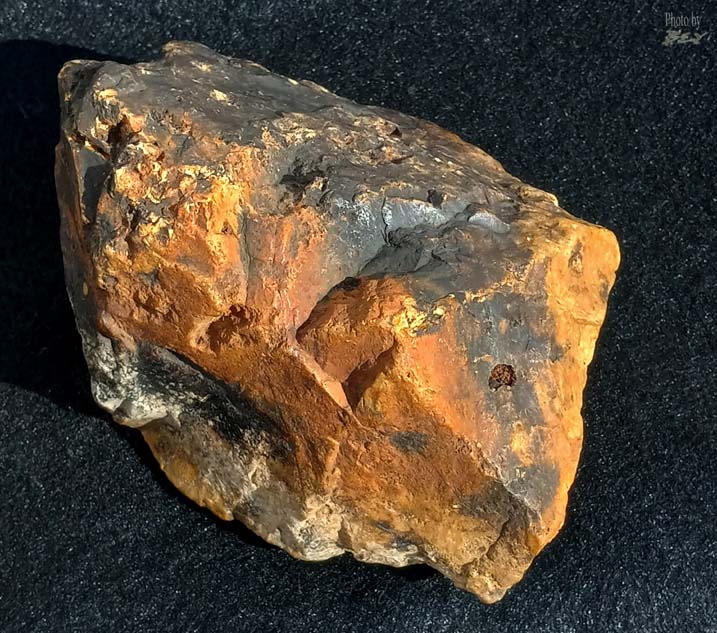
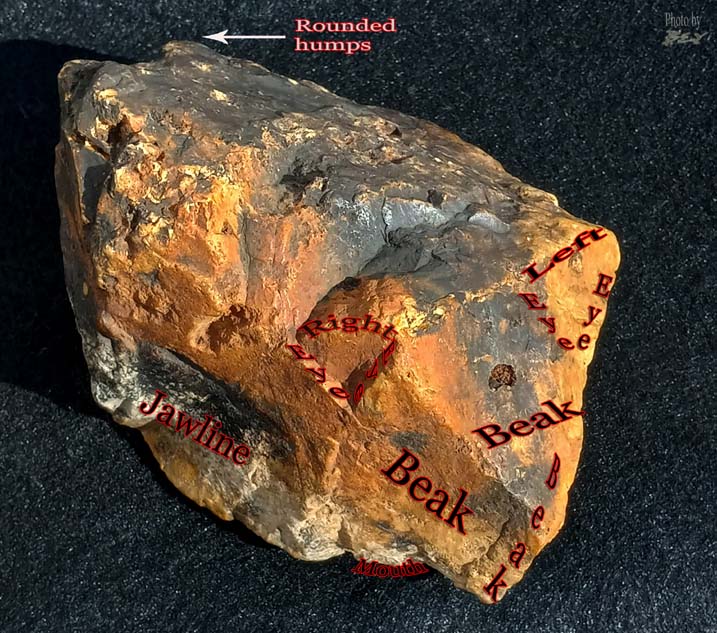
This facial image, is perhaps the easiest to recognize. It is an anthropomorphic bird figure facing forward and slightly to the right 👉. In this example, the angular section forms a sharply pointed beak. Atop the beak an extensive black banded pattern begins on the right frontal portion and continues across the top of the beak. From there this pattern extends upwards 👆 between the two eyes 👀. After passing the eyes the banding pattern widens to encompass almost the entirety of the top of the stone, which represents the top of the head. The most posterior section of this piece forms the rear of the head. Here, the exterior border forms two rounded humps similar to the bun hairstyles we’ve seen. In this example the head should be thought of as being adorned by feathers after all that’s what birds are covered with 🤣. The top of this stone is designed to represent not just feathers, but a feathered hairstyle flowing in a backwards pattern. This makes sense when you take into consideration how the top of this stone is textured. Remember, I told you, that many of these stones were designed with a tactile component. They are meant to be touched. That is to say that some of these stones were created to help mimic what the skin, hair, or in this example feathers would have felt like. The top of this stone is surprisingly smooth despite its seemingly rough contours. One may even say that it feels as smooth as a bird’s feathers beneath the fingertips 🙂. The right eye is formed by a triangular Gouged section. The left eye is also triangular in shape, but its triangular shape is created with the aid of the exterior border of the stone. The lower portion of this stone is where the limestone white pigmentation is seen. This white pigmentation begins just below the beak and extends backwards. For this bird-like figure, the white pigments are used to represent white feathers that cover the mouth and the lower right portions of the face, cheek, and jawline. Don’t believe me? Maybe you will when you see this characters full smiling face.
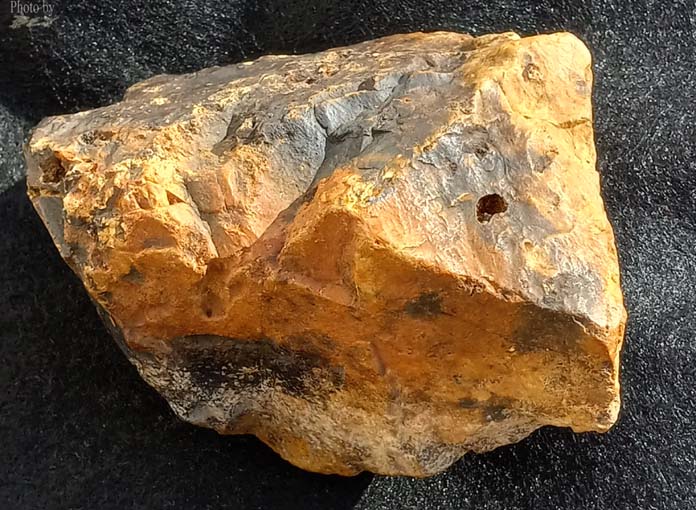
Here the face is seen looking upwards. From this perspective you can begin to see the smiling mouth just below the angular nose.
Using applied leverage we can assess that this is in fact a “rocker” type stone. When the bird-like figure looks (rocks) upwards 👆 you can observe that the limestone white pigments wrap around the lower portion of this stone helping to create a broad smile. Remembering that many of these stones were created so that facial images can look upwards cannot be forgotten when analyzing these stones. Not only is it a built-in orientation point for many stones, but it also suggests a deliberative theme amongst the Aha people. A theme that was repeated over and over again. The question 🙋 becomes why?
Here I would like to take a small deviation to cover a few things. They’re expressly in regards to some things that were just stated. The first is the type of terracotta stone that I told you was at the core of the stone above. I really need for you to see a better example of this type of stone. Why? Because this type of stone wasn’t just used as a core or base stone. As a construction material it seems to have been quite useful.
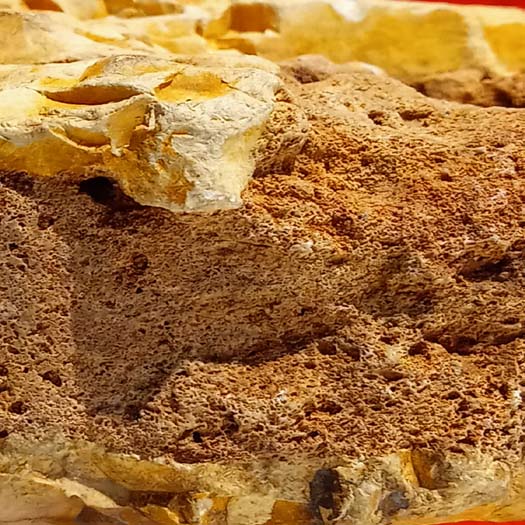
Above is an Add-To or Put-Together style stone. It showcases the type of terracotta stone at the core of the previous piece. Do you see how seamlessly these two starkly different stone materials were married together? Impressive!
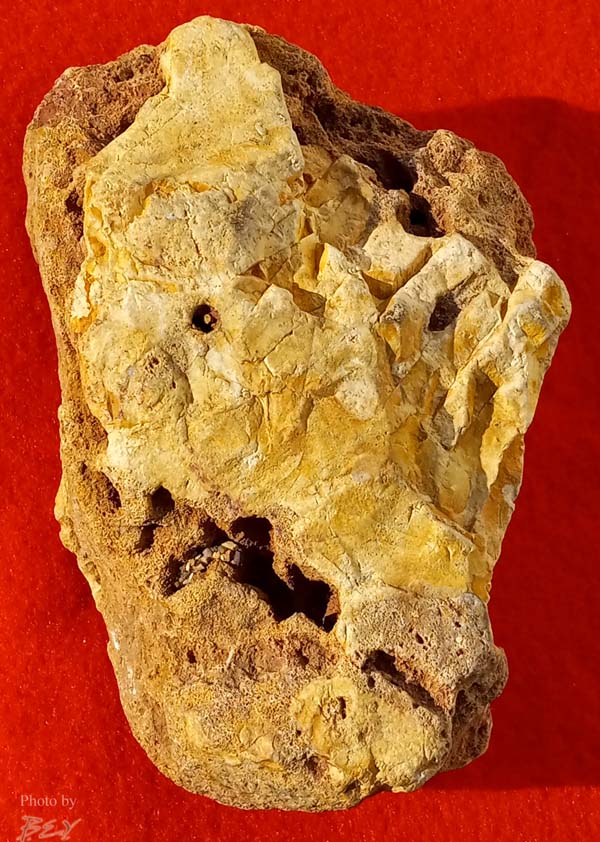
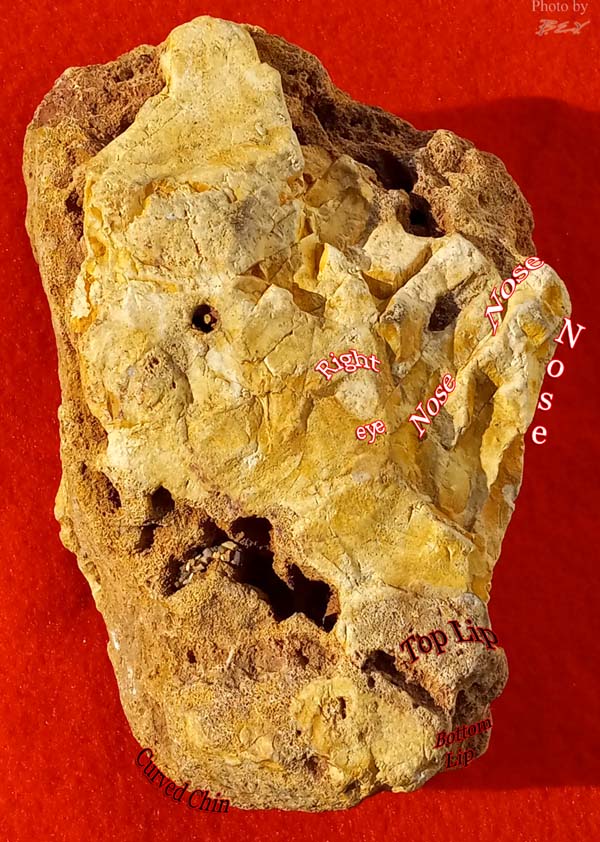
In this picture the face is pictured from the right profile as it faces to the right 👉. I’ve labeled the right eye, upturned nose 👃, and thick protruding lips. As you view this piece, determine if there any repeated design patterns present. Also, think about what the colors of this stone are symbolically telling you. If you understand that then you can comprehend why this face appears to be it damaged 💭.
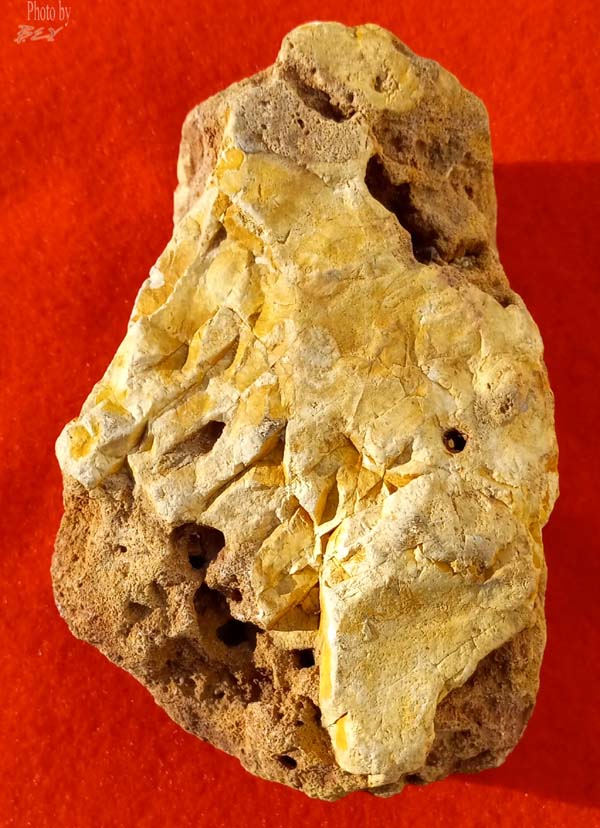
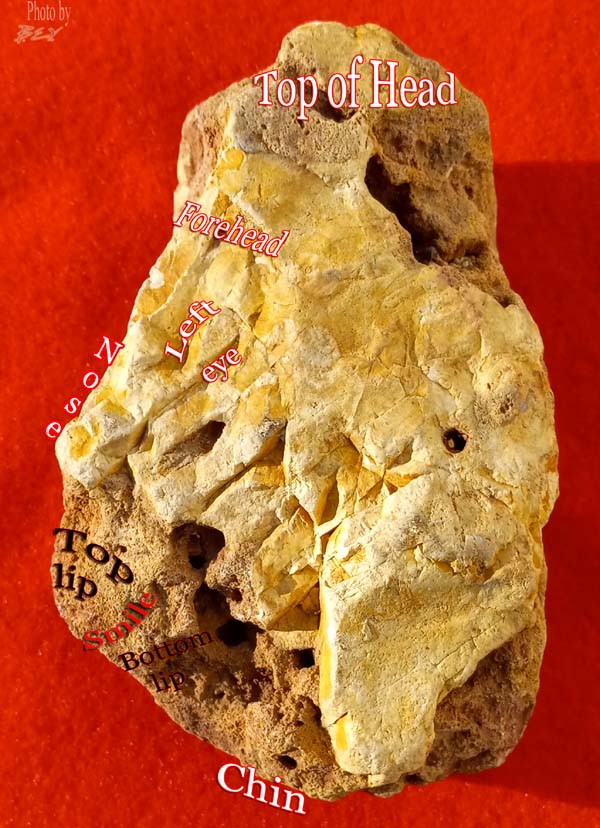
In this photo the stone has been rotated 180⁰. After doing so a new facial depiction comes into view. The figure faces left 👈 and appears to be human. The eyes, nose, and closed mouth have been diagramed. To put both images into perspective, you should know that the stonework seen represents skin, whereas the exposed terracotta represents the flesh beneath. Can you now form a better picture of what you are seeing? Great! Also, knowing that you can put the deep gouges seen in their proper perspective. They are not the result of erosion as might be presumed. If you notice, for each image the gouged sections are located behind the lips. Why? Because the gouged sections represent the hallowed out interior of their mouths. Do you get it now? We’re being told, based on color symbolism and the construction of the stone, that these faces were exposed to fire that burned significant portions of their faces and heads. Fire that literally burned through their flesh 😲.
Were you able to see any of the faces discussed? If not, no worries. I’m keenly aware of how much skill it sometimes takes to be certain about what you’re looking at. Fortunately, that wasn’t why I showed you the last stone. My primary reason was to show you the type of terracotta used for both it and the stone before it. Also, I wanted you to see the repeated design pattern you were asked to look for. Which one? The circle within a circle pattern of course. You did see it, right? Just in case you missed it, there’s a close-up photo of it below.
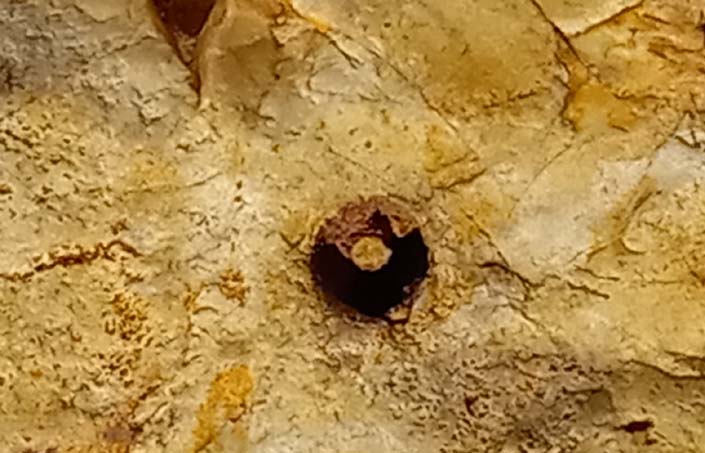
Yes, this is the same circular pattern that I’ve shown you three times before in this chapter. What’s different is the way the this pattern is crafted. Notice that the outer circle is sunken as compared to its center. Although there’s signs of erosion in the sunken portion, the circle within a circle pattern is intact. Now, how can I be sure that this, and the other circular patterns, are one and the same? Simple, they all measure 0.5 cm in width. How’s that for certainty? You should really pay attention to how this particular circle within a circle pattern is formed. Its design lends more credibility to the idea that some type of specialized tool ⚙ was employed to create it. A tool that was used repeatedly. Still don’t think that’s possible? Well, the next time you see this pattern I’m certain it will change your mind. In fact, it’s sure to make you question what types of tools may have been widely, and repeatedly, used by people in the ancient past. That’s a pretty bold statement I know, but you will see and you will be amazed 😮. In addition, consider how the circular pattern was used. For each of the faces shown this pattern was not used to form an eye. It was however, in both examples, located on the side of the head. Its placement value would seem to indicate that either a very specific type of damage created a hole 🕳 in the head. Or, as I’ve theorized, perhaps it is meant to indicate that something was attached to the sides of the cranium of those depicted 🤔. Either explanation is fascinating to consider. Another fascinating thing to consider is the shape of the shadow that is projected inside this circular ⭕ pattern. If it is an intentional shape, and I believe it is, then we are looking at the symbol for fire 🔥. Now why would the artist that made this stone purposely project the fire symbol here? I’ll let you think 💬 about that.
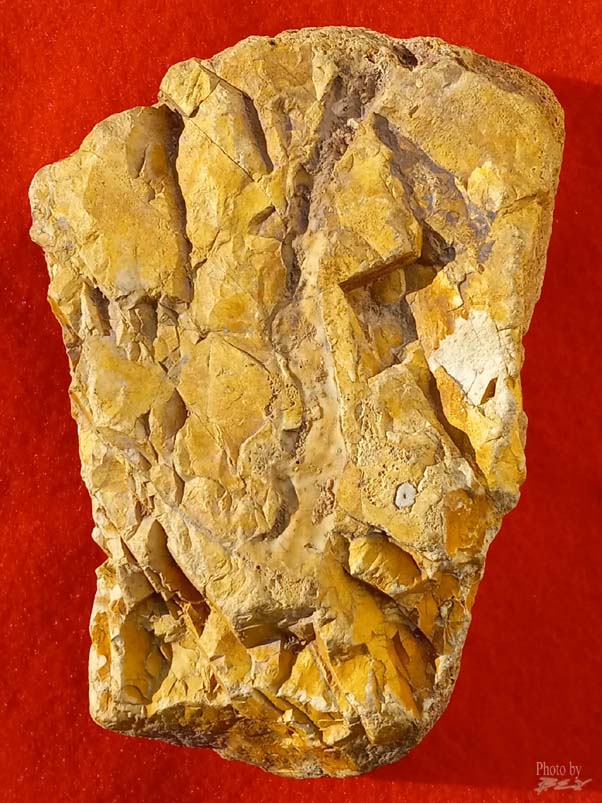
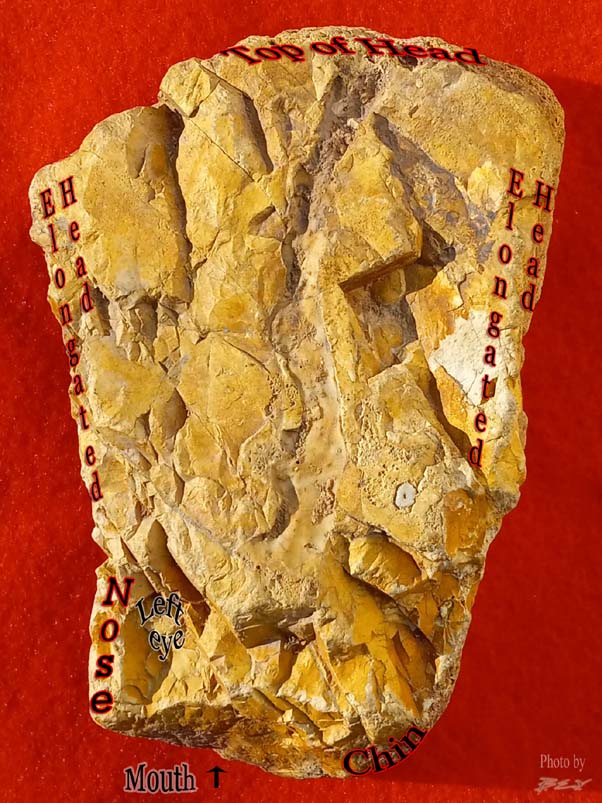
Above is a picture of the opposite side of this stone. As you can see, the outer stone layering covers the vast majority of this side. Visually this stone may appear to be damaged, but it’s not. Its overall appearance simply mimics a fractured stone. Beyond the image that’s been diagrammed there are at least three additional faces depicted on this side of the stone. Below you’ll see the face shown to you from a slightly different perspective.
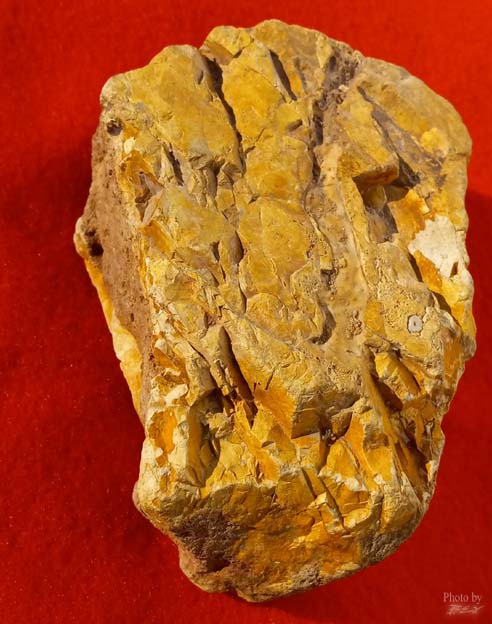
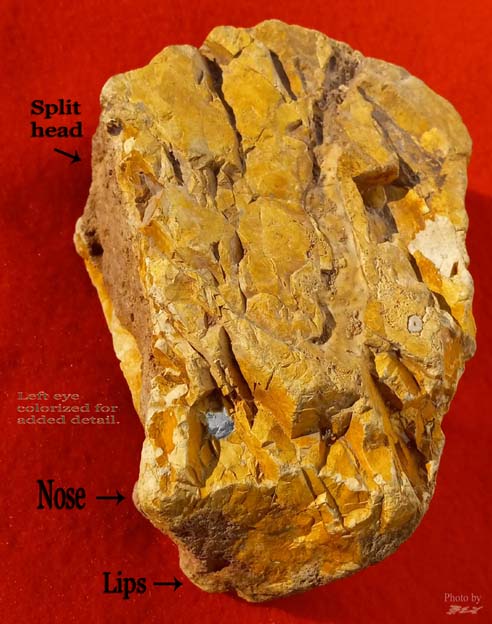
From this angle you can better see his smiling face and a noticeable split in his head. How certain am I about the description given to you? Very, and there’s some concrete reasons why. First, there’s the design of the split head. It’s a design pattern often replicated, in various ways, with these types of stones. Second, there’s a unique type of banded symbol that can be found on his nose. Third, this particular banded symbol is replicated somewhere else on this stone. It too has been placed on someone’s nose. A nose that is designed quite similar to his squared shaped nose. How did knowing about this symbol assist me in analyzing this stone? Well, by understanding the meaning of this symbol and its placement value, I was informed what was responsible for splitting (causing damage to) both their heads. What does the symbol mean? Keep reading 📖, you’ll soon find out.
SOMETHING NEW 💡: Whenever it’s obvious that all or portions of a terracotta stone is intentionally lacking all or portions of an outer stone casing, they can be classified as “raw”, “partially-raw”, “naked”, or “partially-naked” terracotta pieces.
Let’s return to the stone with the image of the anthropormorphic bird figure. The second thing that needs to be addressed is the extensive black banded pattern. I’ve previously said that banded patterns can be more than just decorative. By recognizing the symbols used to create these patterns we can sometimes find written language incrscriptions. How about we try to do that now? Who knows, perhaps we’ll throw in one or more new symbols for your enjoyment 😁.
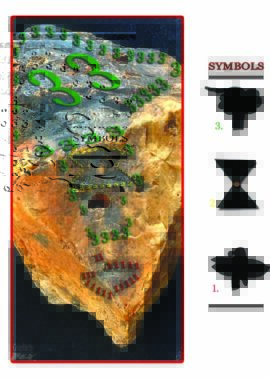
This is the black banded pattern shown close-up. I’ve labeled each symbol numerically. The numbers have been placed to conform with the general outline of each symbol.
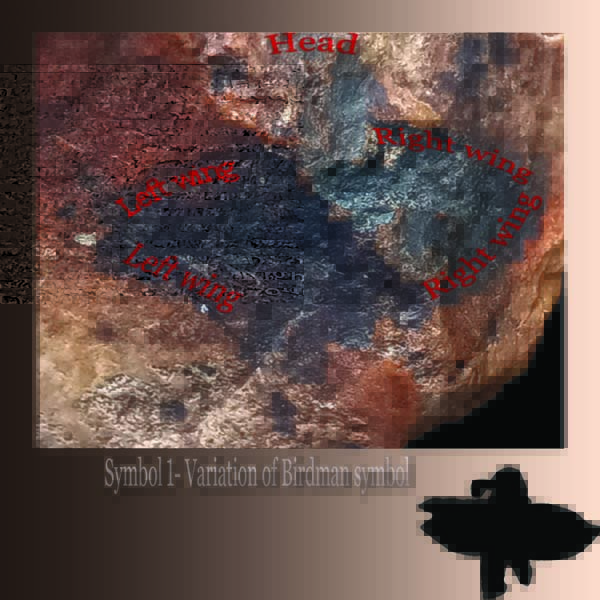
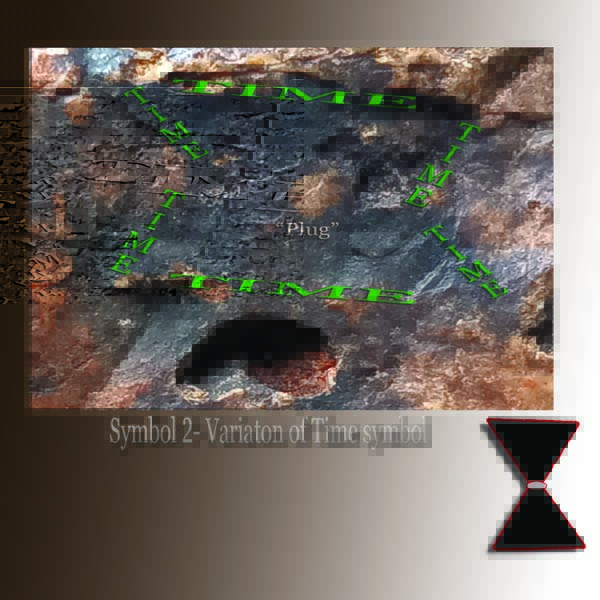
The first symbol appears to be a variation of the Birdman symbol you’ve been shown. Here the symbol has been combined with a least two additional symbols, bad air and “spikes”. Simply analyze the exterior borders of this symbol, especially the right wing to find the pattern. In addition, pay attention to how this symbol was placed on two separate geometric planes. The second symbol represented is Time ⏳. It overlaps the base of the third symbol. If you look closely at the darkest of the black pigments in the middle of the banding the Time symbol can be easily found. The variation of the Time symbol seen here is one that appears on the symbol guide. What’s so important about this variant? Well, when you look at this symbol you will notice the contrast in colors at its center. Now, imagine that the Time symbol represents an actual hourglass. Understanding the way a hourglass functions, if we were able to plug the center of it, thus preventing the sand inside from flowing, what would we be symbolically doing? That’s right, stopping time! So, instead of this variation simply representing time, from a written language perspective its meaning is “in the time of time stopping”. Or put another way, “in the period when time stopped”. With that said, be sure to analyze the “plug” that has been used to symbolically stop time in this variant. Its details might both surprise and inform you. Who knows, there might even be a clue as to what the Aha people had in mind with the creation of this symbol. In other words, you might gain some insight into what ancient people thought had literally stopped time. The third and largest of the symbols, like the birdman symbol, occupies different geometric planes. It begins on the beak of the anthropormorphic bird, covers the totality of the top of the stone (the head), and has smaller portions along the sides of the stone. There is no way for me to show you the totality of this symbol in one static image. So for now you’ll just have to trust my description regarding the placement of this symbol 👌. Just what is this prominent third symbol? It’s smoke!
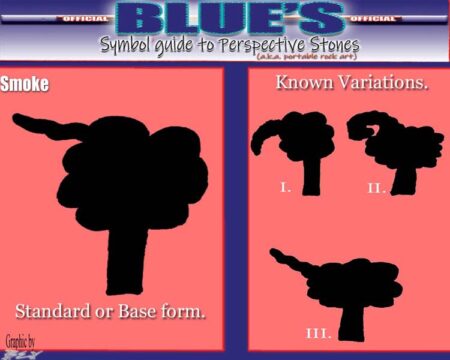
Are you surprised by the meaning of this symbol? Did you think that smoke could only be expressed symbolically with color? Now why would you think that? On the symbol guide weren’t you shown that fire has a distinct language symbol? Well, the same applies to smoke. That said, remember that color symbolism and written language symbols can be used in tandem, but they don’t have to be. It just so happens that on this stone both methods of communicating the language term for smoke were used.
Going back to the birdman symbol, did you see the hints of red pigments along the border of the right wing? Speaking of the right wing, did you find the micro banded pattern of “humps” and “spikes” that can be clearly seen? Were there any “spikes” located elsewhere in the symbol? Would you like to know what these “spikes” represent? Of course you do. Well, since you have been incredibly patient, I’ll tell you.
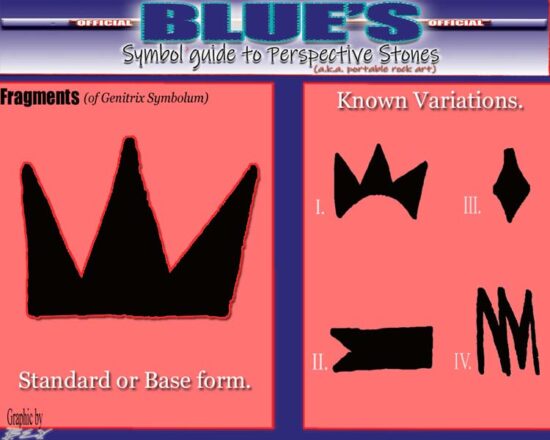
From a symbolic perspective, the multiple spiked patterns I’ve been calling your attention to represent fragments of Genitrix Symbolum. When you consider that the mother symbol has a tri-pronged spiked section, you can understand where this symbol would have originated. You can also begin to understand the narrative associated with this stone. Before we get to that narrative, let’s take a brief look at one of the ways this stone’s inscription can be read.
Keep the box example in mind as this stone is rotated. Focus on the black banded pattern. In sequence you are seeing symbols 1, 2, and 3 with the latter being most prominent. Do you remember how, when using a box for an example, I showed you various ways symbols could be placed on a stone? Does that example make more sense now that you’re eyes 👀 can see exactly what I meant? Do you see the importance of knowing that sometimes stones have to be rotated in order to be read? As stated, such a practice seems odd to us, but to the Aha people it seems to have made perfect sense. Also, after looking at this video, ask yourself a question. Beyond the first Time symbol that you’ve alreay seen, was there an additional Time⌛ symbol present? 💭
Now that we understand how to read the symbols on this stone, what story or narrative does it impart. Recounting the narrative in a brief context would be something akin to, “In the time of the birdman, fragments, bad air, and black smoke”. Or when we consider the variations in the symbols, their placement value (parts being located between the eyes of the bird-like figure), and the first person perspective in which the story is told, we get something a little more creative. Something like, “In the era of smoke, when the air had turned bad, I beheld the birdman. As I looked up into the sky, I saw him. His wings were damaged. The bad air and sharp fragments of the powerful Genitrix Symbolum did him great harm. This I beheld in the period when time stopped”. Don’t you just love a good story? I know I do 🙂. Did you notice how this stone conveys a narrative very similar to the one seen on the last rocker stone. Remember, its inscription included a story of a birdman figure with wings that were damaged. Hmm 🤔. With that said, my dearest reader, keep this little tale in mind as we analyze much more than this stone’s inscription.
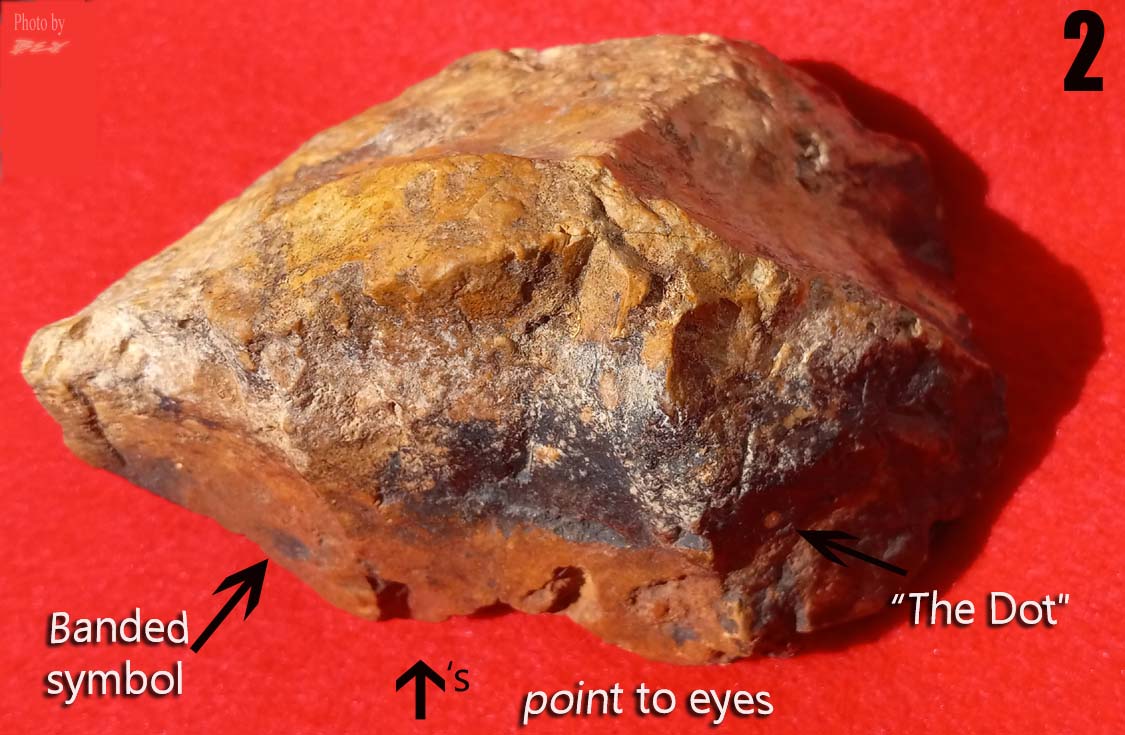
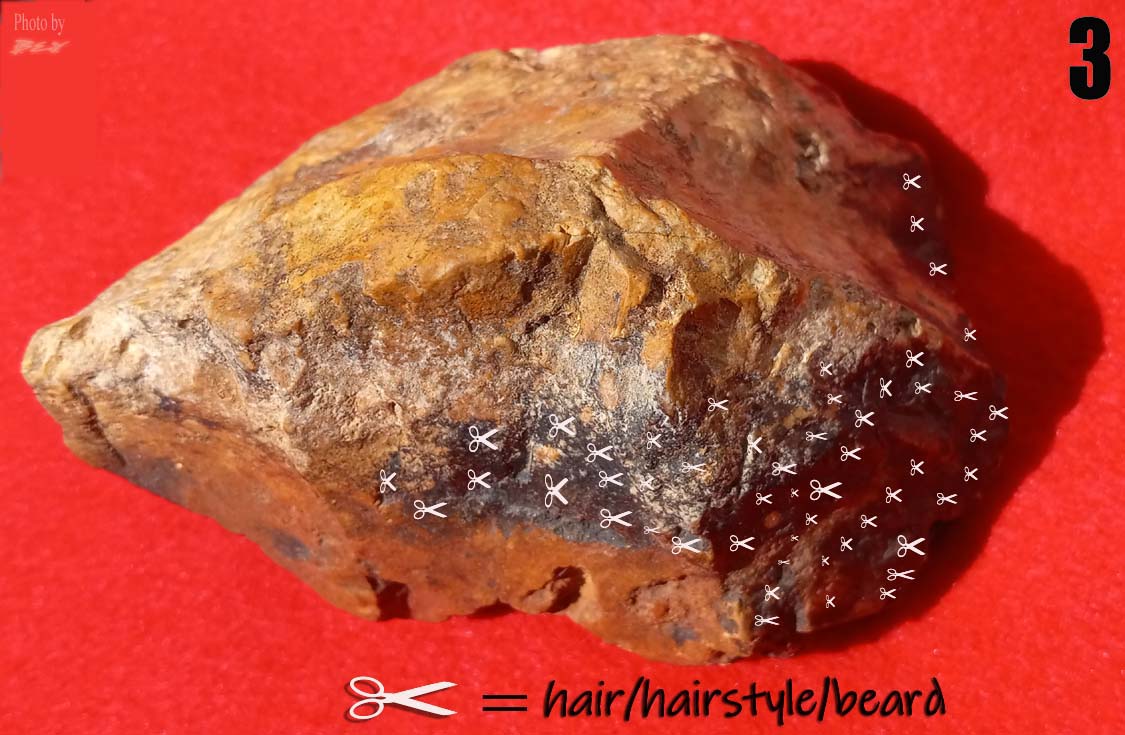
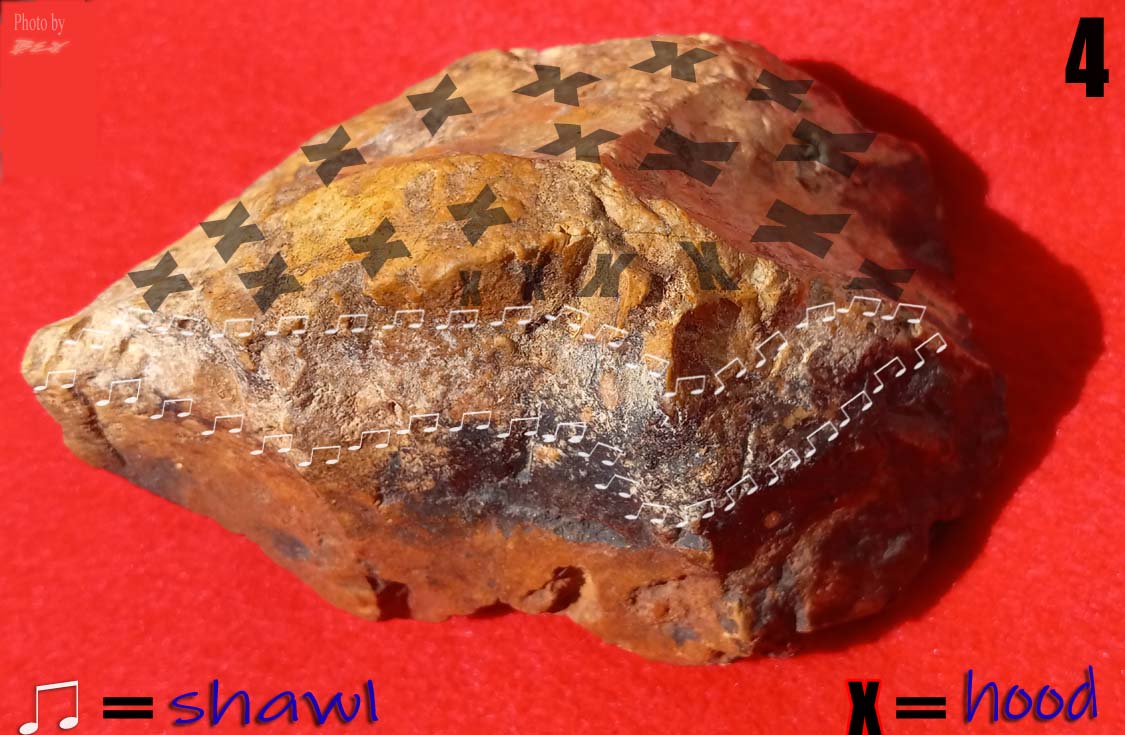
Here I’m going to do something that I haven’t done before. I’m going to show you the same exact picture four times. Why? Because in each of them something different will be highlighted. What? The basic design details used to create the two faces you’ll soon be seeing. I’m confident that if I can show you “the parts” you’ll have no problem seeing “the whole”. Got it? Great! Let’s do it!
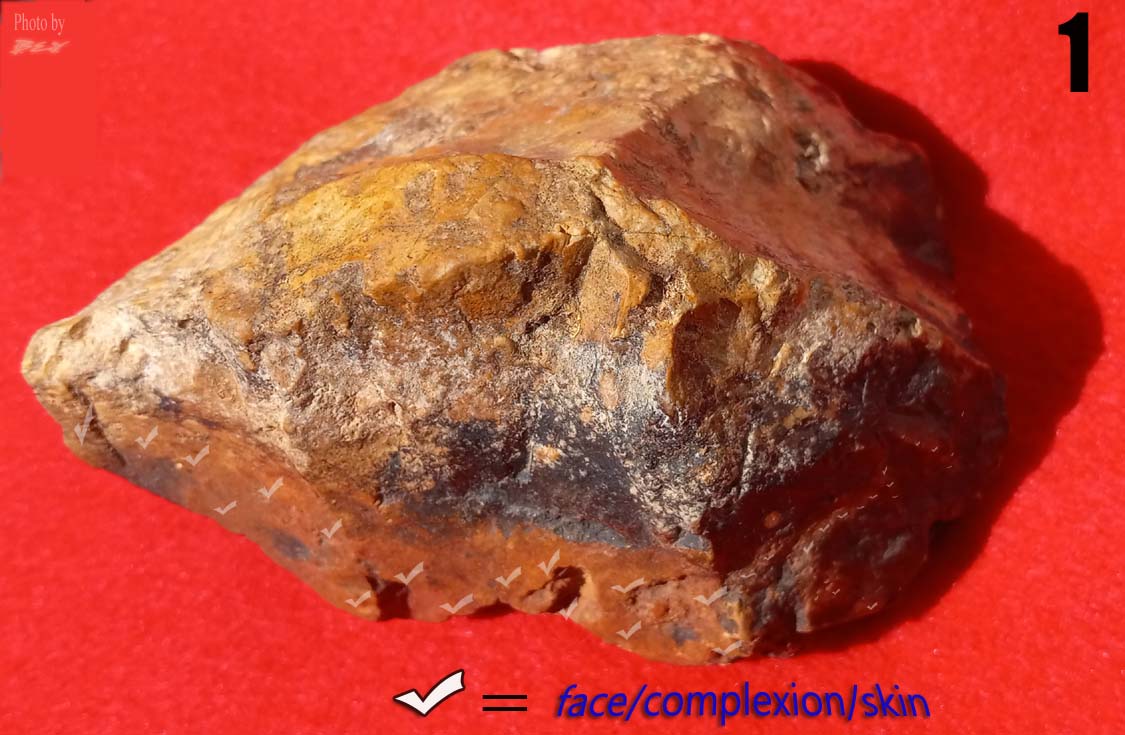
1. Stone is shown from the opposite side laying flat. From this perspective two humanoid figures can be seen. The checkmarks ✅ you see indicate the complexion or skin tone of the two individuals.
2. Arrows ↖ point to their eyes 👀. Her eye is “The Dot”. His eye 👁 is a small contrasting black banded symbol.
3. The large black banding pattern represents hair. For her, the hair is seen flowing downward over her forehead. It’s seen in either a natural configuration or perhaps a lock or braided hairstyle. For him, the banded pattern represents a beard. Its placement puts it on the left side of his face. It begins at the level of the temple in a narrow band then widens to encompass the lower facial area. Scissors ✂ have been placed to delineate this pattern.
4. As you’ve just witnessed, while colors frequently have a symbolic meaning when appearing on these stones, that is not always the case. Another example of this is the opaque white banded pattern that is seen on this stone. Here the pigments have been used to represent an article of clothing, specifically a shawl made of silk, linen, or some other type of textile. Music notes 🎵 have been placed over its general outline. The darker off-white pigments represent a secondary article of clothing. In this example, the the pigments have been used to replicate a hood similar to those seen on robes, cloaks, or other garments. X’s have been placed around its basic outline. Okay, now that you know what to look for, you will know exactly what you’re looking at when we take a more comprehensive look at these two faces. 👍
Keeping in mind the fact that lighting is a key component to analyzing these stones, we’re going to view the next two facial depictions in two ways. We’ll look at them beneath a cloudy sky as well as underneath full sunlight. The difference in how the images appear will be subtle, but definitely worth taking note of.
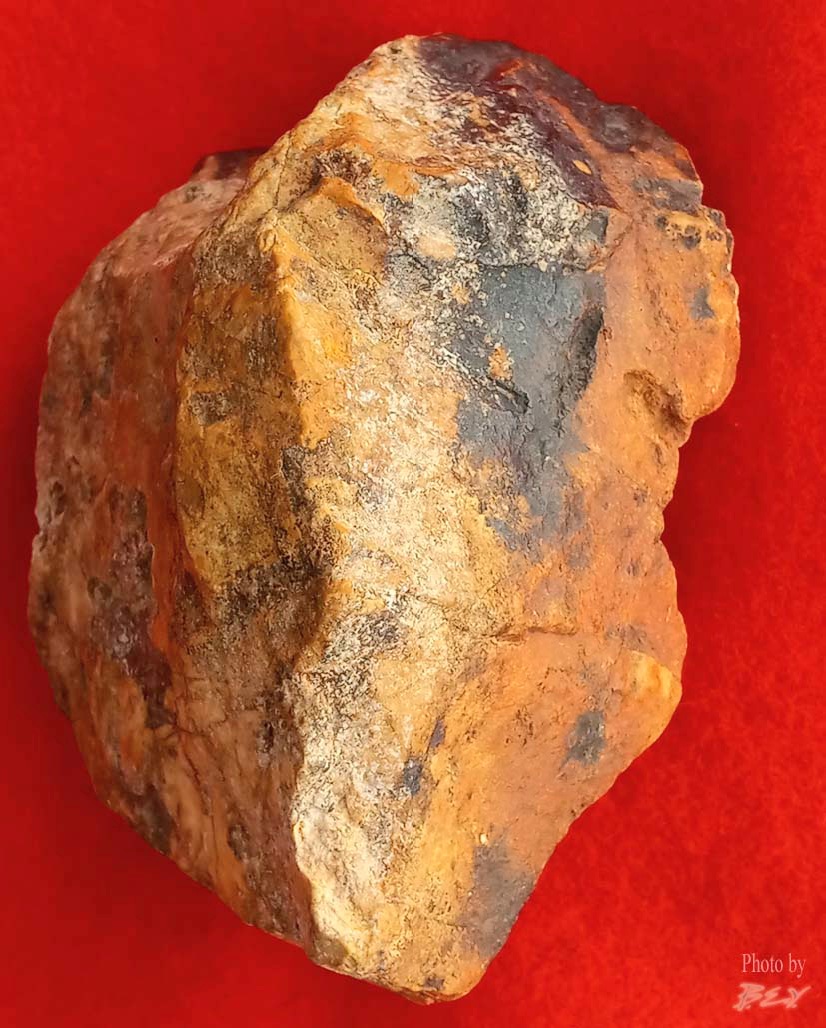
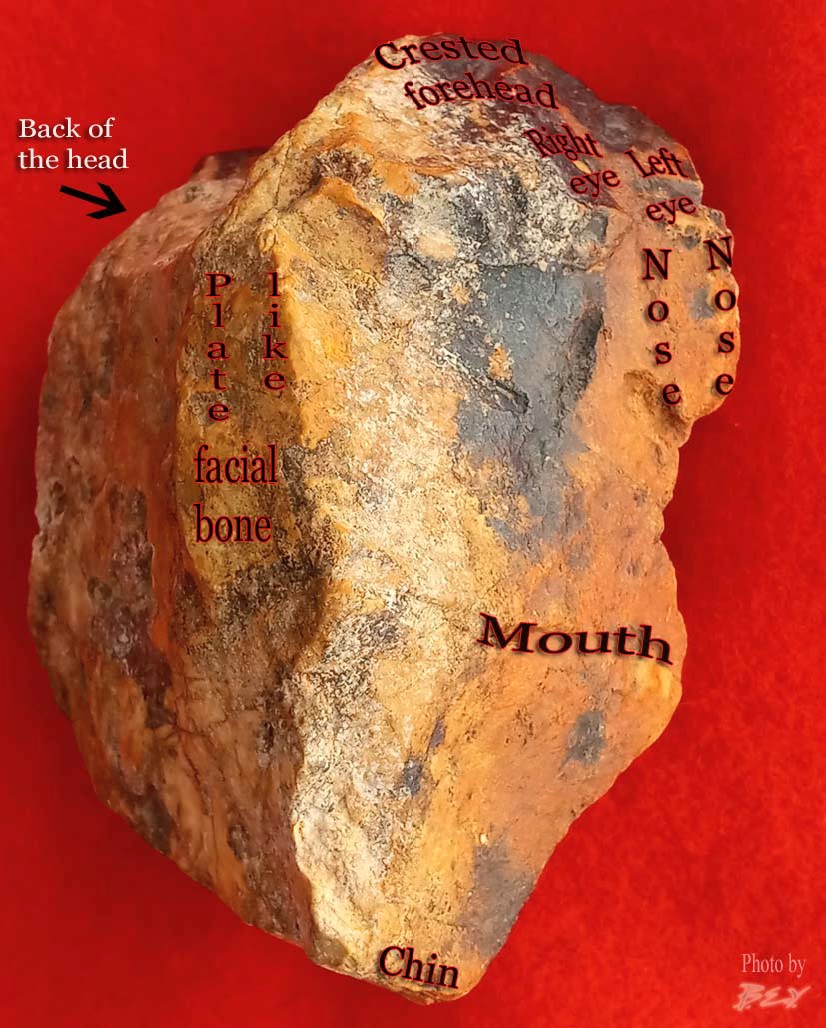
Seen beneath the low illumination of a cloud filled sky a beautiful humanoid female figure faces rightward. As stated, the deep reddish-tan (ruddy) color represents her face, skin, or complexion. The black pigments representing her hair shroud the right eye and covers the front of her face. From this angle the left eye is partially covered by hair as well. Between the eyes her wide, slightly curved nose is seen. From this perspective her mouth displays a slight grinning expression. And, while the mouth may look like a simple fracture line, it’s not. The mouth has actually been created from a slight elevation in the outer stone layering. Next is the face and head. Did you notice its unusual shape? This figure boast a wide crested forehead attached to a large boney or plate-like facial bones. Consider this, humans, at least modern humans, don’t possess frontal cranial bones or facial bones in any such configuration. Also, pay attention to how disproportionate the front of the head is versus the back of the head. These details form the basis of why I described this facial depiction as humaniod versus human. Another thing is the location of the eyes. Anatomically, humans don’t have eyes positioned atop our foreheads, but if you were paying attention that’s precisely where her eyes are located. Why is that important? Because from a built-in orientation standpoint this stone didn’t have to be rotated in order for the face (or more specifically the eyes) to look upwards. In other words, based on the position of her eyes, she would have had a perpetual upwards gaze. For me, the most exceptional design of this piece is reflected in the black banded pattern and other pigments displayed on this piece. For example, from this perspective you can better observe the abundance of beautiful, black, flowing hair that adorns the head. You can also see how masterfully the white pigments, representing a head shawl, were applied. Its subtle opaque application allows for the hair, skin, and parts of the hood to be seen underneath. If you look carefully at this image you should have no problems seeing what I’ve just said. There is no doubt that the way the multiple pigments were arranged and applied is an example of superior artist thoughts and skills. It equally took considerable skill to create the contrasting color and texture of the hood she is seen wearing. Skill that could have only come about via considerable experience.
Do you recall how a few images back I showed you that facial expressions on a stone can change? Would you like to see the facial expression on the last face change? That would be pretty sweet wouldn’t it? Alright then…


Above is the same humanoid figure now pictured beneath the brightness of full sunlight. The stone has also been placed in a standing or upright position. The grinning expression that the figure once displayed has been replaced by an open mouth representing suprise or shock. From this vantage point the face also appears to be severely damaged, especially on the left side. In practical terms, the difference in facial expressions just witnessed can best be described as “before and after” images. That is to say, many of these stones contain images depicting two, or more, consecutive moments in time. The first moment typically reflects when the individual initally “looked up”. The second, or subsequent, image(s) typically display the shock, suprise, or aftermath that followed their looking upwards into the heavens. Speaking of moments in time, you did recognize the Time symbol that’s present in the last image, right? C’mon, you couldn’t miss it! Could you? Well, in the unlikely event that you did we’ll focus on it now.

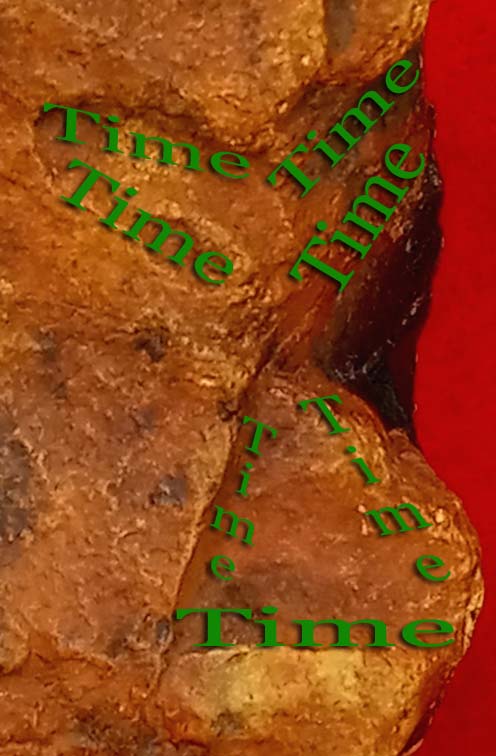
This is a close-up of the Time symbol as it appears just below the nose and forming her open mouth. It was created by the use of the Gouged style. Do you remember how I said that when Time is used as a combination symbol the lower portion represents the language expression “in the time, era, or period of”? Well, look at how smooth the lower portion of this symbol is in comparison to the top. One migh even say that when compared the top of the Time symbol looks damaged or destroyed. Do you see where I’m going with this? You should. Taking into consideration that the visual “damage” is an intentional part of this symbols design, what language expression can be attributed to this variation of the Time symbol? Did you just say, “In the time of damage or destruction”? Well, how about that! Do you see how smart you are?
By recognizing the variation of the Time symbol used, understanding the color symbolism, and the placement value given to “The Dot“, and with the use of the symbols contained in the black banded pattern, we can understand the narrative or story being told by our beautiful humanoid maiden. What is it? Here goes, “With my eyes cast upwards to the sky, I saw “the dot” shrouded in smoke. It did not alarm me. However, as I continued to watch, what I beheld greatly shocked and disturbed me. It quickly became the time of smoke. It begat an era of destruction and great damage. This was the period when time stopped”. Interesting story, huh. Could I have mentioned the birdman since the role it played appears in the banded inscription? Of course I could have, but some thingbs you already know.
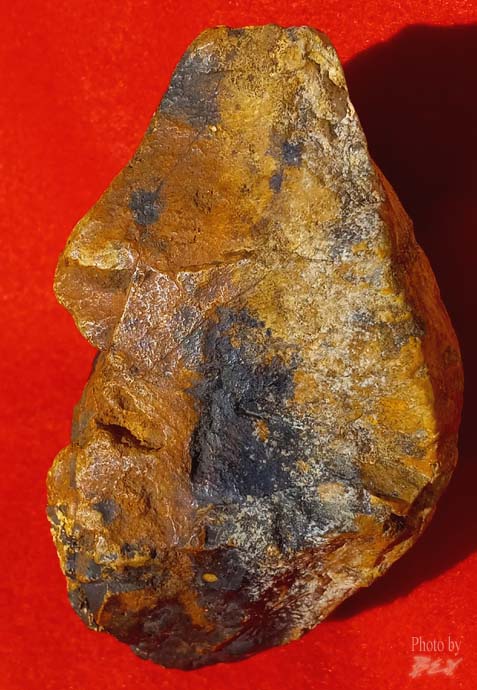

With a 180 degree rotation of the stone the face of a humanoid male figure is seen facing left. From this perspective we can better observe the black banded symbol that forms his left eye. We can also see that the top of his head is bald, like other faces that you’ve seen. His facial expression is neither happy nor said, but instead he appears to be in a somewhat pensive mood. Something worth noting is the shape of his beard. If I’m correct, and let’s save time and assume that I am, this banded pattern doubles as a combination symbol. Below you can see it both close-up and drawn out.
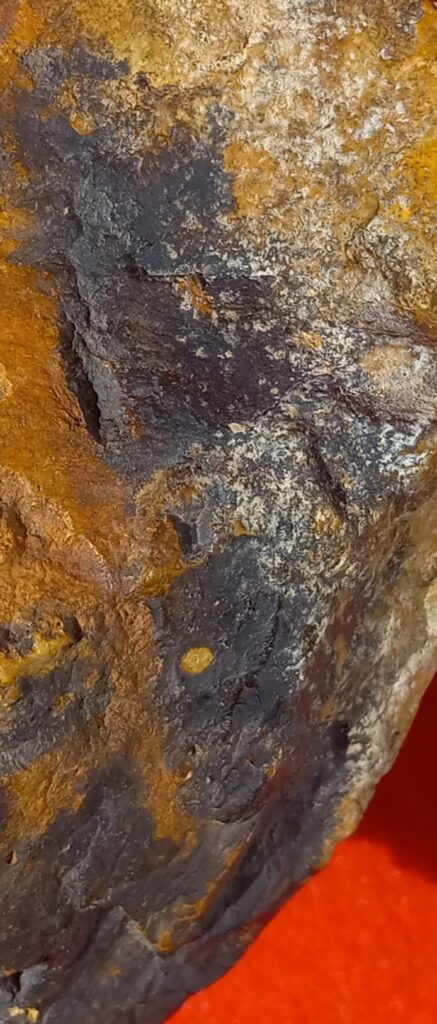
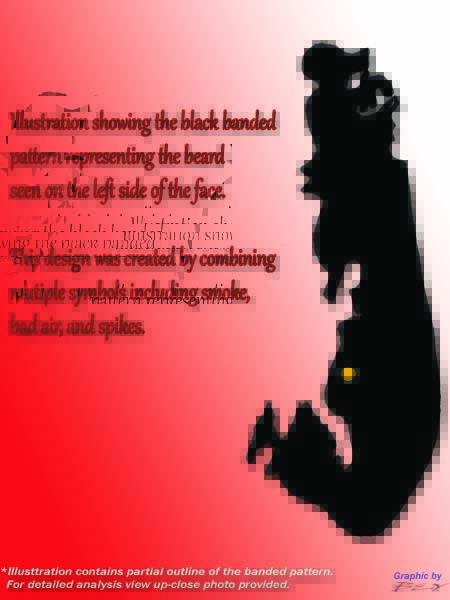
Above and on the left you can see a close-up view of the banded pattern that forms the beard. On the right is a drawn version of the symbol, I’m no artist 😂, but the drawing is more or less a basic outline of the pattern. Use “The Dot” as an easy reference point 👌.
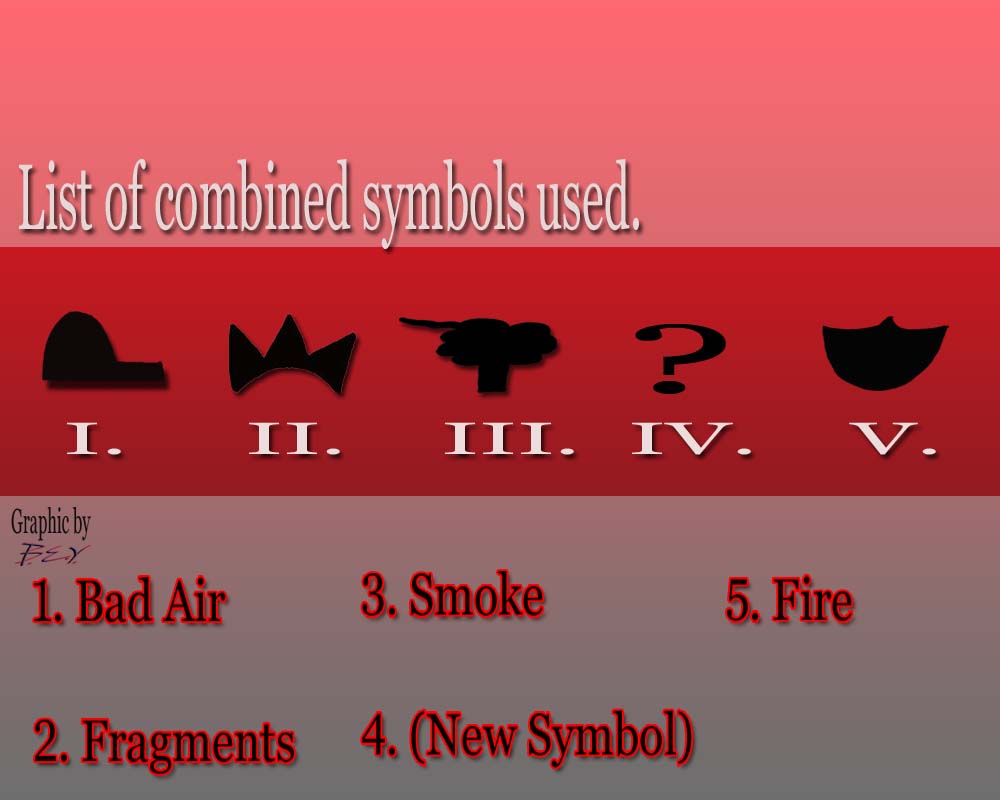
So, what are the symbols that were combined? At least four and if you take into account that the beard is a part of the Smoke symbol, five. If you look closely, you can see that the upper portion of the symbol contains a myriad of spikes interspersed with a few humps. That makes two combined symbols. A portion of this symbol forms the tail section of the Smoke symbol. That makes symbol number three. After descending down the side of the face, the lower portion of the beard curves before terminating in a triangular point. This triangular point forms the head of the fourth symbol. What is this symbol that has been combined with smoke, fragments of Genitrix Symbolum, and bad air? I’ll show you below.
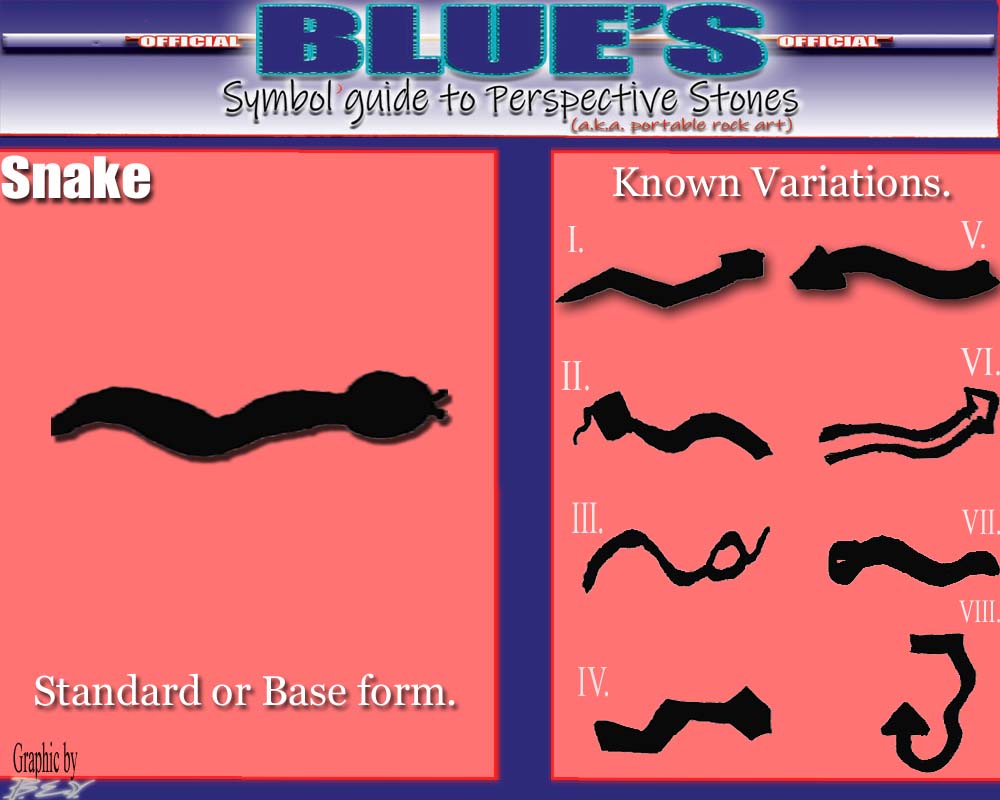
Previously, when indtroducing you to the symbol for dragon or fire serpent, it was indicated that the symbol for snake was different. Now you can clearly see why it is impossible to confuse the two symbols. You can also see how it is easy to identify one symbol versus the other. The snake symbol can always be identified by its undulating body. That is to say that thus far I have yet to encounter a depiction that features the snake symbol where the body was formed by a straight line. Its head is usually designed in one of three shapes, namely oval or rounded, squared or blunted, and triangular or pointed. Frequently this symbol is observed with either an outstretched tongue (sometimes forked) or symbolically releasing venom (or other substances) from its mouth. In this example the snake is shown symbolically releasing the black smoke that forms the smoke symbol. Look closely at the sides of the triangular shaped head. You can observe how the symbol for smoke emanates from this point. Are we being told that somehow a snake was responsible for releasing a smoke-like venom? Perhaps. It would make sense considering how the snake’s tail is formed at its end.
From this perspective the top of the beard gives the faux appearance of being one uniform shape. A spiked uniform shape to be specific. Based on the symbols you’ve already been taught, what symbol do you see? Here’s a hint, “where there’s smoke, there is”… say it with me, “fire”🔥. That makes the fifth symbol. See how easy that was? Haven’t I been telling you that symbols can appear anywhere? Are you starting to better understand the artistic genius involved in the creation and use of combination symbols: Now, Let’s construct the narrative given by this stone. First, we have a snake 🐍 with a tail of fire and a mouth spewing smoke. Second, let’s add “The Dot”. Based on its location we can see that it is not being used as an eye. In fact, “The Dot” is seen inside of the snake. What does this tell us about its placement value? That’s right, “The Dot” is symbolically being consumed by the snake of fire and smoke. The question becomes, what exactly is this dot? Before answering, keep in mind what I’ve told you about this dot as a repeating design pattern. Also keep in mind how “The Dot” was used for the female humanoid figure. For her it represented something that was seen while she looked upwards into the sky. So, my dearest reader, if I were to ask you to go outside on a clear day and look upwars to the sky, what yellowish-white dot would you see? Do I really need to say it? The sun 🌞.
Here I need to pause to make a clarification. While the yellowish-white dot seen represents the sun in both this and the female humanoid example, I’m not telling you that is always the case. As a language symbol the sun can be represented in a variety of ways and colors. What you’re seeing now is just one example. Now, let’s continue.
So, what’s the message or narrative attached to this male humanoid figure. Well, it’s much the same as the story told by his female counterpart. A story involving smoke, fire, bad air, and fragments of Genitrix Symbolum. Let’s go back to how I described his left eye. I stated that it too was a banded symbol. Did you take the time to analyze it? If so, you could not have missed its curved bottom and spiked top and sides.
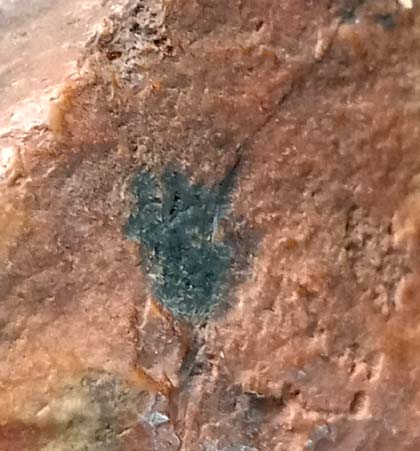
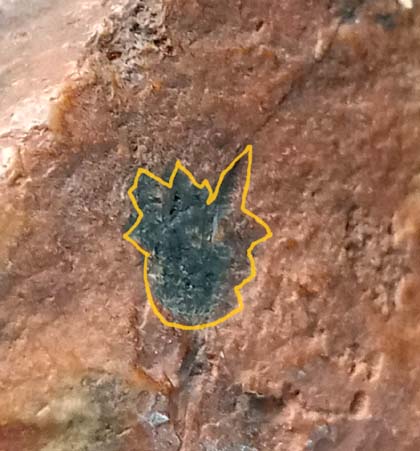
So, what did you see? If you have been paying attention to what I’ve said about symbols having many variations, then you know that what you are looking at is a variant of the Genitrix Symbolum symbol. But you knew that right😂 Therefore, his story would be something akin to the following, “When I first looked up into the sky, what I saw did not frighten me. Then, as quick as a flash, it appeared; the great Genitrix Symbolum. Its appearance shocked me. I was instantly filled with a sense of confusion and became exceedingly scared. With its arrival a great many things were witnessed in the heavens above. Most dreadfully, it appeared as if a snake of fire had consumed the sun. Its mouth spewed black smoke. the air became exceedingly bad making it nearly impossible to breath. My mate and I fearing the worst sought refuge by placing our bodies flat upon the ground. There the air was least polluted. Our quick thinking and our love saved us on that day. This is what I beheld and what we endured on that day of great destruction. It was the day that began the period when it seemed as if time itself had stopped”. As far as narratives or stories go, I’d say this one is both intricate and endearing. Then again, I am a sucker for a really good story. How about you?
Based on the narrative I’ve just imparted, two questions arise. First, how can I comfortably tell you that this couple sought the refuge of the ground when confronted with a massive amount of smoke and bad air. The answer to that is actually quite simple. Do you remember when I explained what you would be seeing in regard to these humanoid figures? Didn’t you wonder, at least a little bit, why the two faces were seen lying face down? Let’s see if I can make it make sense to you, alright. Let’s say that, God forbid, you were confronted with a lot of smoke, say from a house fire. How would you instinctively seek to limit your exposure to the smoke and toxic fumes? That’s right, by keeping your head as close to the floor as possible 💡. Does it make sense now? I thought that it might 😊. Secondly, how do I know that that the humanoid figures were intended to be viewed as a couple, much less a couple in love? Well, that too is an easy one to explain. When this stone is observed lying flat, with both faces cast downward, what shape does the stone form? Did you miss it? This time I bet you did and I don’t blame you. Understanding that symbols can appear anywhere can sometimes be hard to fully appreciate. That said, I’ll take the time to show you the symbol that I’m sure you missed 😉.
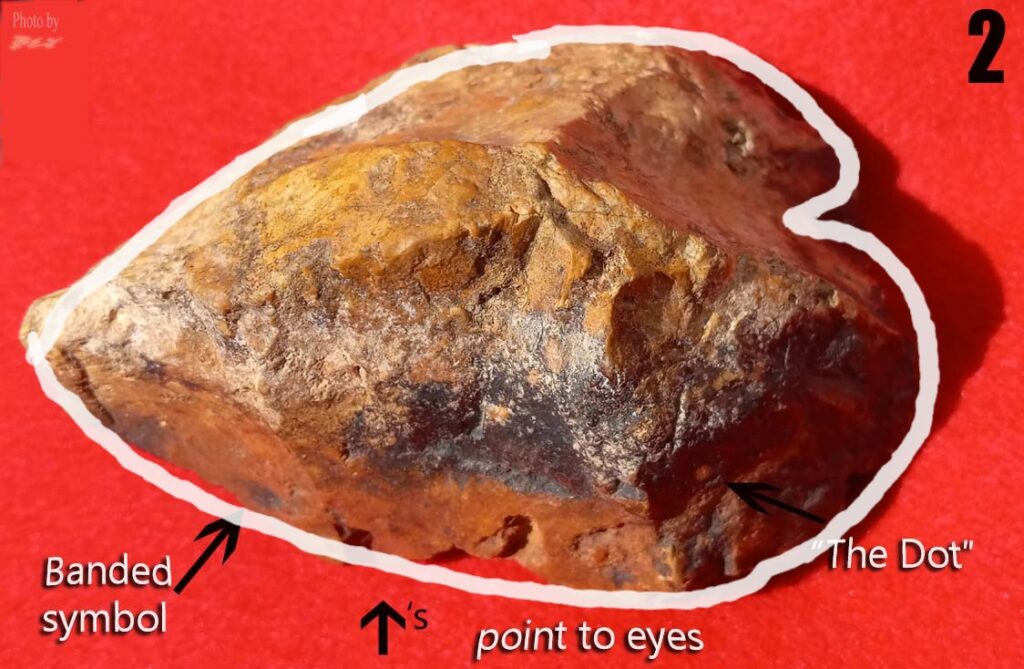
A white outline has been used to highlight the heart symbol that is formed by the border contours of the stone. Amazingly, the Aha people utilized the heart or valentine symbol exactly as we do. For them its symbolic meaning was the emotion of love.
I’m going to conclude this chapter by reviewing a stone from earlier. I’ve shown you so much already that you might not remember it. So, to be nice I’ll refresh your memory with the photo below.
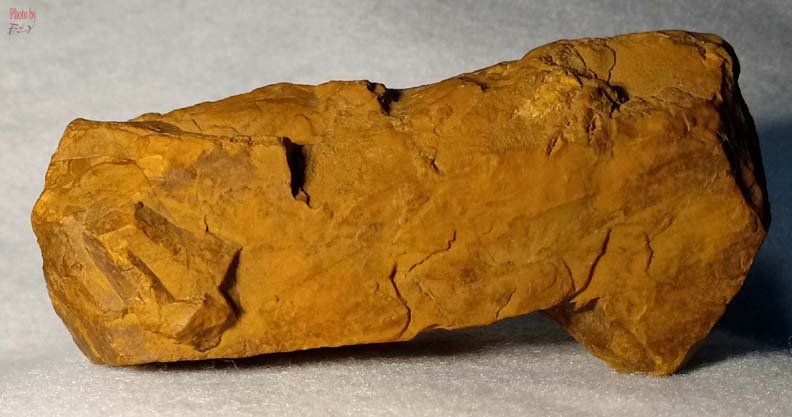
Much like the other stone resembling a linchpin, this piece has more to it than initially meets the eye. Although I didn’t describe any imagery associated with this stone, your remarkably observant eyes may have already gleaned one or more faces from the previous photos shown of it. If so, color me impressed 👏. You definitely deserve another gold star 🌟. This stone is so fantastic that it is worth evaluating in details large, small, and micro. the next few photos were taken beneath a variety of lighting conditions, but primarily beneath an overcast sky 🌥️. Why? Because I’ve told you that the artisans that created these stones were skilled in the knowledge of light, shadows, angles, stonework, and geometric ideas. The upcoming pictures will help showcase these facts. I meant what I said about “Total Stone Techniques”. The makers of of this ancient art utilized the entirety of each stone as a canvass. As such I want to show you how they made it possible for something to be two or more things at once. Just as importantly, I’m going to show you how a stone can reveal two or more images at the same time. That is if you know what to look for 🤔. I’ve said, and will continue to say, there is nothing random about the design and construction of these stones. In this example multiple styles from the nine 9️⃣ distinct styles were used to create a true art masterpiece. I guarantee that you are about to see some awe inspiring and mind-blowing things. Over the decades my eyes have seen some truly exceptional pieces. This stone is definitely one of them.
Dearest reader, I have a question for you. How open is your mind? This is no idle question. I ask because I’m about to share with you will require the use of all the impartial objectivity that you can muster. The truth be told, I debated long and hard as to whether I should discuss this stone in detail. Why? Simply stated, because you might not like what I have to say about it. And, although we’ve come a long way since the beginning of this work, you may not be ready for what I’m about to share. I hope that I’m wrong. And, if I am wrong, and you are the type of open-minded, objective, and impartial thinker I believe you to be, then you’re about to be treated to something special.
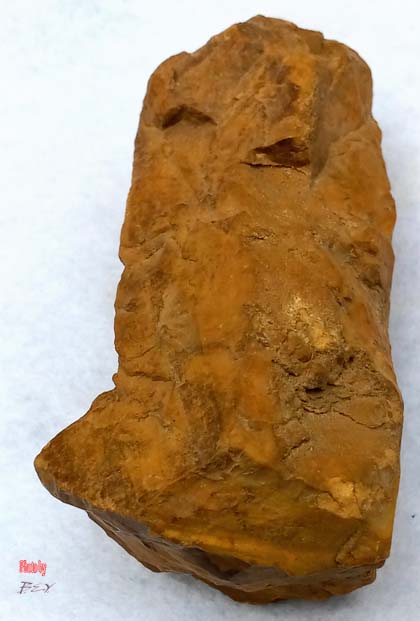
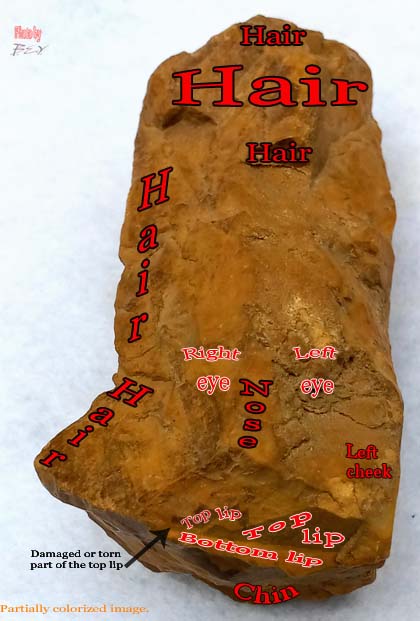
This first image is a depiction of what appears to be a human female figure. She’s facing forward and her head is tilted slightly upwards. The head itself is elongated and in the center of the forehead an oddly shaped prominence can be seen. This prominence represents hair positioned atop her head. Think forward facing pompadour 👌. The remainder of the hair covers the right side of the face. Its terminus is represented by the angular projection on the lower right side of the stone. How do I know that these sections are in fact intended to represent hair, or more specifically an organized hairstyle? When you analyze these sections, you can easily observe the black pigments that were added. These pigments have been used to represent hair including individual strands of hair. By following one particular wavy 〰 strand downwards 👇, you’ll find that the banded pattern widens. What you’re seeing is a singular strand of hair covering parts of the face and ending just above the right eye. Speaking of which, at first glance it would appear that the right eye is missing, but that’s not the case. The right eye is formed by the break or split in the black banded pattern representing the hair strand. Its pupil, or center, is barely visible. It is formed by a small circular pattern. Although the pigments are faint, if you zoom 🔎 in closely on this area you will see it. Here I want you to pay close attention to where the banded pattern, or strand of hair, splits. You’ll notice that there is an area with black pigmentation that is slightly darker. It overlaps the lighter black pigments. The banding here is somewhat horizontal, slightly resembling a curved “L” shape. This overlapping pattern represents the right eyebrow. You should catalog the way this eyebrow is shaped in your mind. Why? Because it too is a repeated design pattern oftentimes seen with these types of stones.
Another thing that lets me know that this is the right eye is the shape the banded pattern takes below the ocular space. While, as I’ve said, the black pigments represent hair and, in this case, a strand of hair, that is not all it represents. Here the artist used the lower portion of the black banded pattern to create a variation of a specific symbol. A symbol that is almost exclusively used in conjunction with the eyes. It’s a symbol that was shown to you back in chapter five. There it was attached to another symbol. When present, this symbol is often represented by equidistant parallel lines that diverge outwardly at the base. Notice, I said often, not all the time. I know, I know… It would be great if I explained this symbol and its meaning at present, but I won’t 🤭. Instead, I want you to consider its placement value, or how it’s being used. Hint: The symbol represents something that only eyes can do 💭.
In stark contrast to the right eye, the left eye, or more specifically the left orbital cavity, is shown with a considerable amount of damage. Its bumpy and haggard appearance tells us that something has happened to it. What happened? From its hard, course, and damaged appearance, we are being told that somethimg has impacted the eye and face with tremendous force. What was it? Fortunately we don’t have to guess. Why? Simple. If you look carefully at this area you’ll see lots of black pigmentation or banding. These pigments were used to create specific banded patterns and symbols. Patterns and symbols that coupled with their placement value tell us exactly what this figure’s face endured. Within the borders of this banding, as well as in its interior, a “hump and spike” pattern can be seen. One such pattern is made up of slightly darker pigments that run vertically across the space representing the center of the damaged left eye. I’ve already explained exactly what these two symbols represent. With that in mind we’re symbolically being told what? Trust your eyes 👀 and what you’ve learned, and the answer should be evident. Yes, this person’s left eye and the left side of their face was damaged by a mixture of “bad air” and fragments of Genitrix Symbolum. See how simple that was 🙂?
A wide nose separates the two eyes and at its distal end connects to a large triangular area. Within the lower portion of this space the upper lip can be identified. The lower portion of the mouth appears somewhat rounded. If you look closely you can easily observe that this area also contains a banded pattern. Take note of what symbols this pattern forms. Question… can you see that the mouth displays a gleeful expression? If so, pat yourself on the back dear reader. You’re starting to trust your own eyes 👏. Just to be sure we’re definitely on the same page, below you’ll see this beautiful face with added color 🙂.
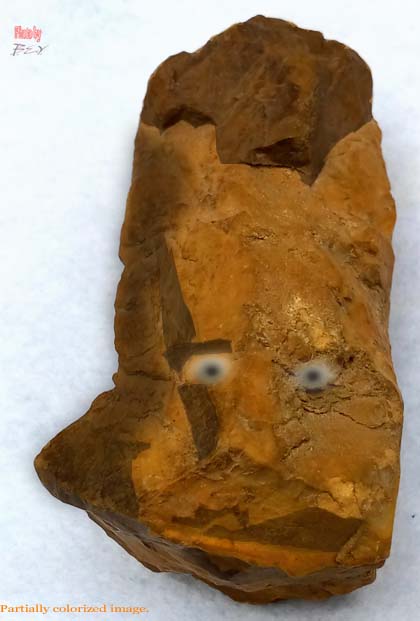
Partially colorized image of the face described above. Eye color and design based on artistic interpretation.
So what story does this face impart? Well, it’s a simple tale and one you’ve heard before. The instant that she looked upwards, with a smile on her face, she was struck by stone-like fragments leaving her eye severely damaged and the left side of her face injured and burned. Simultaneously she was exposed to smoke and “bad air“.
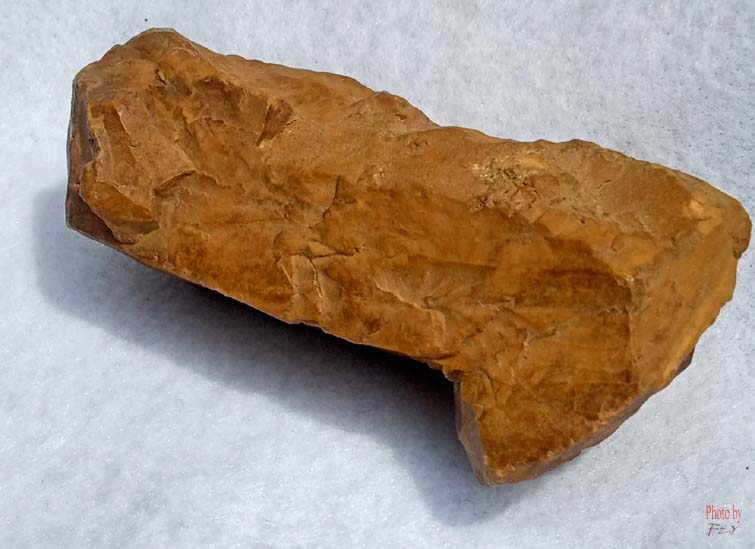
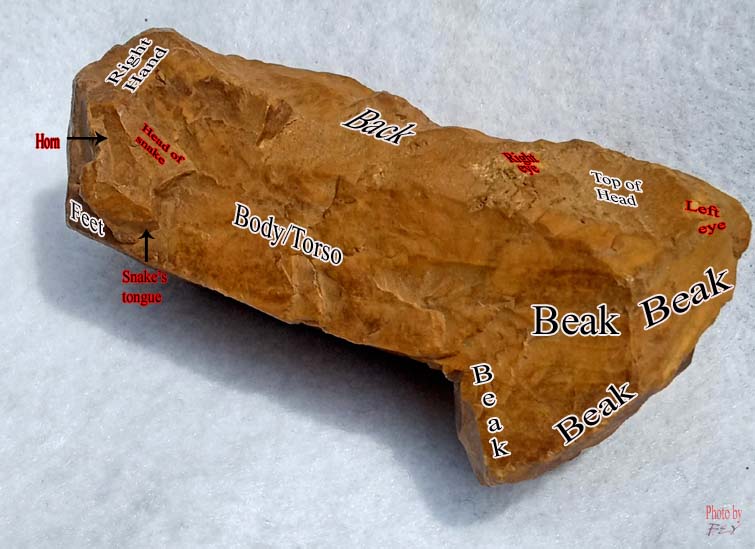
With a 90⁰ rotation of the stone the image of an anthropomorphic bird figure can be seen in a prostrate position, flying upwards. And yes, I said flying. This figure boasts an oversized, Chibi style, head and shares the same banded mouth as the last figure. What was hair now forms an angular beak-like mouth. Behind the oversized head an outstretched body can be seen. The top of the stone represents the back, buttocks, and back of the legs. The bottom of the stone reflects the torso and front of the legs. Although detailed body features can’t be seen, what can be seen is the prominence, that formed the previously shown front facing hairstyle. This prominence is now at the rear of the stone and is being used to replicate a clinched hand 🤜 or fist. The area that forms the top of the wrist contains two banded symbols. One is a variation of the bad air symbol. The other contains a spiked pattern. Atop the back of the hand black pigments can also be seen. Interestingly, the hand is not empty. It’s actually shown holding or grasping something. What is it? Great question. It’s what appears to be the head of a horned viper or snake. Its eyes are separated by an hourglass ⌛ shaped head. The eyes themselves are formed by faintly seen circles with vertical lines resembling slit like pupils. Above the right eye a hook shaped horn is seen. The mouth is closed, but subtle black pigments form an outstretched tongue. So that you can easily visualized what has been described a partially colorized photo is below.
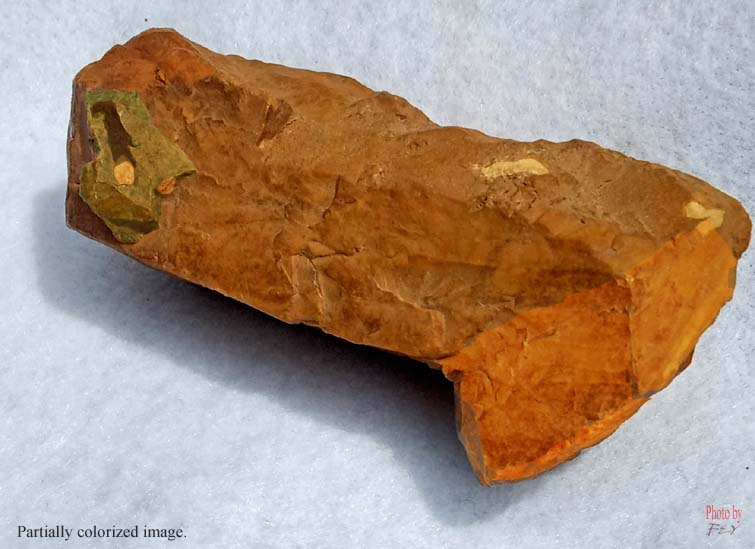
If you’re wondering how I was able to describe this image with surety, I’ll tell you. The truth is that over the years I’ve recovered other stones with a similar design and theme. What theme, you ask? The one in which a figure is depicted flying upwards with something in their clinched hand. The objects being carried vary, but the overall theme is the same. Someone flying upwards with something held tightly in their hands🤜 . Don’t take my word for it now. Instead, wait until I show you a similar stone in the next chapter. The clear repetition of this theme, amongst other stones, is impressive🙂. It’s worth noting that the idea of ancient people having the ability to fly is not a new concept. It is an idea and belief that has existed for thousands of years. In some tales humans were capable of flight based on natural ability. For example, in many ancient civilization there was a belief, and in some cases worship, of a Birdman type figure. Other tales speak of humans flying with the aid of such things as flying chariots, flying boats, flying wagons, and flying wheels, to name a few.
As I analyzed this stone, one supposedly mythological figure stood out in my mind, the Hindu or Vedic character of Lord Shiva. Why? Because according to Vedic text he was no stranger to flying machines or vimanas. In fact, according to legend, he was skilled in making said vimanas or flying craft. Another thing that made me think of the character of Lord Shiva was the horned viper or snake that was held by the anthropormorphic bird figure. Why? It’s because according to Hindu text, Shiva had an extraordinary affinity for snakes. In fact, if the ancient tales are to be believed, Shiva frequently utilized snakes as potent and effective weapons. I know what I just said is not a connection that most people would make when they view this stone, but… I’m not most people 😊. Besides, to be clear, I’m not stating that this piece is in anyway meant to be a depiction of Shiva. Neither am I stating that it is in anyway connected to the worship of Shiva. We’re clear on that point, right? Cool😎 . So what am I saying? Well, I’m just saying that it seems like a little trace of the “legend” of Lord Shiva might be on display here. Emphasis on might.
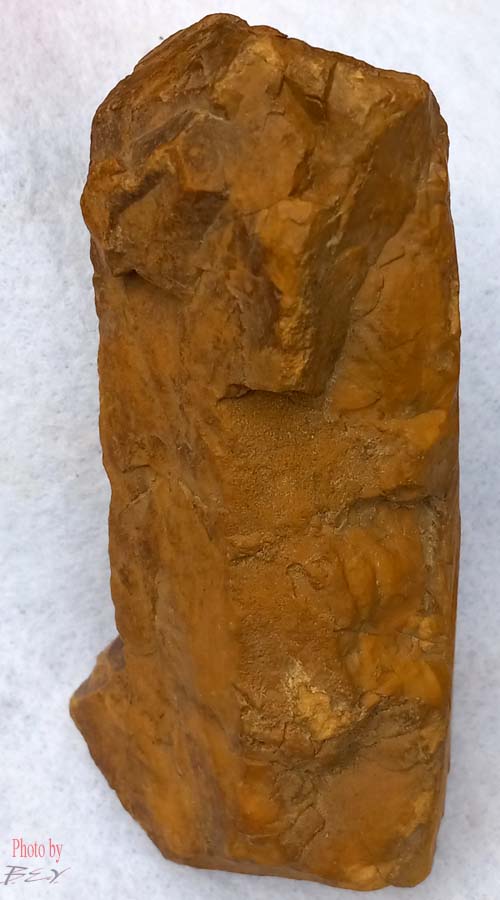
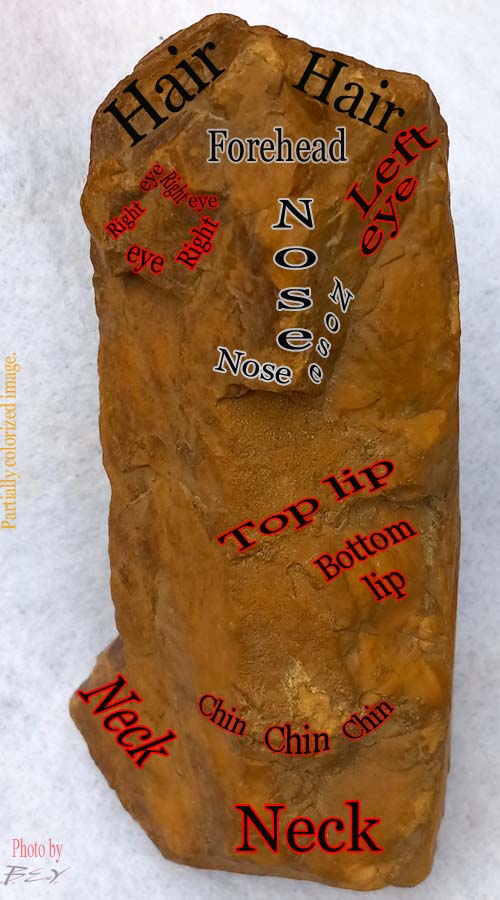
With another 90⁰ rotation of the stone, another facial depiction comes into view. From this perspective we are treated to an anthropomorphic male figure featuring an elephant-like nose.
Side Thought: At first glance you might not recognize it as an elephantine shaped nose, but that’s because it’s truncated or shortened. This perhaps indicates that despite its aged look, the figure pictured was not fully mature. Perhaps, even a child or young adolescent. Just think, even a baby elephant’s nose or trunk starts out truncated or short then grows over time. I’m not saying that’s why this figure’s elephant-like nose is truncated, I’m just saying maybe 🤔. We’ll return to the stone by looking at a partially colorized photo.
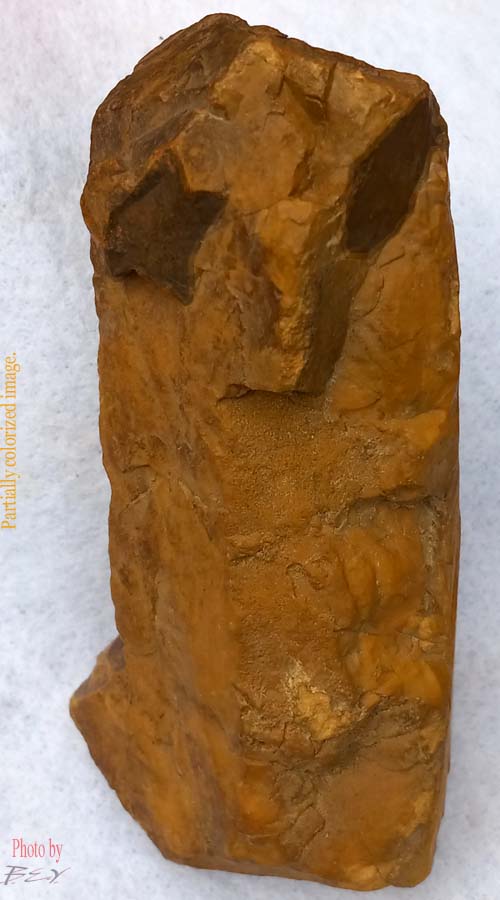
Partially colorized photo of the face described above.
The top of the nose is attached to a large, bone-like, angular shaped forehead. From there it curves downward and to the right side of the face. Be sure to look at the black pigments found on the right side of the nose. This banded pattern connects to an additional banded pattern that delineates the right eye. If you look closely, you will see that the borders surrounding the eye have the appearance of a misshapen star ★. Also, upon careful examination you will find spike and other symbols formed by the black pigments in this area. The left eye in comparison is relatively smooth and has a pronounced elongated appearance. The face and mouth appear to be displaying a grumpy or frowning expression. Here you should focus on two things. One is the thin banded pattern located at the left corner of the mouth. It too contains numerous spikes 🤔. What symbol does it remind you of? In addition, what placement value can be given to the symbol based on its location? Also consider the symbolic meaning(s) of the color black. If you are able to put these pieces together then you’ll know exactly what this figure is seen doing.
Another thing to focus on is the textured detail given to the bottom lip. Pay attention to how the lip has a series of small grooves that create distinct separations in the surface. Noticeably, this small section is relatively smooth in comparison to the rest of the stone. As small a detail as it may seem, it’s design is quite ingenious. How so? Because it reflects not just the physical texture of the bottom lip, but it doubles as the hair covered forehead for a smaller secondary figure. How’s that for cool? We’ll get to that face in a minute, but let’s finish with “Mr. Grumpy” first 😅.
Below his mouth you’ll find a rounded chin and broad neck. If you give consideration to the neck you will recall having seen its design pattern employed on two previous examples. I mention this because the inspiration for such a design in the neck is quite easy to understand. How so? Simple, the next time you find yourself in front of a mirror, turn your head as if to look over your shoulder. When you do you will find that the base of your neck looks very similar 😉. Now, let’s go back to something. a little bit ago, I mentioned Shiva. Well, something worth knowing about Lord Shiva is that he had a wife, Parvati, and they produced a son, Ganesha. And as fate would have it, Ganesha or Mahaganapati, meaning the omnipostent and all powerful, had the head of an elephant, replete with an elephant’s nose.Interesting, huh? Again, not saying that this stone is connected with “legends” of Shiva, or even Ganesha for that matter. Nevertheless, finding two characters, on one stone, with characteristics similar to those found in ancient Hindu lore is notable to say the least. As I’ve said, all legends, all myths, all fairytales, and all folklore started somewhere.
Question… What if, and I want you to think about what I’m asking, what if, throughout the globe many of these stories and legends have a shared origin? How amazing would that be? I’m not trying to assert that as being the case. I’m just posing the question… what if? As for the secondary image found on this side of the stone, it should have been easy for you to locate based on the reference point that I provided. Easy that is if you paid attention to what was previously said about “the dot“, or in this example two dots. Both were made with a small contrast in the colors of the outer stone casing. If you recognized this repeated design pattern, you no doubt were able to pick out the a human, male figure being depicted. A close-up and diagrammed picture can be found below.
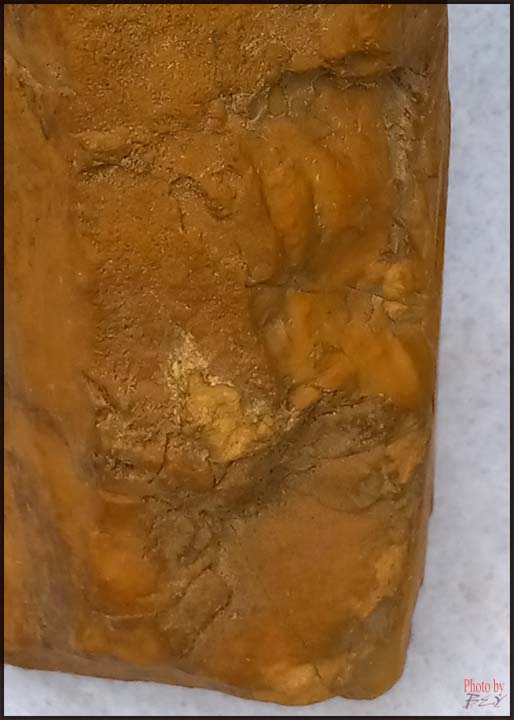
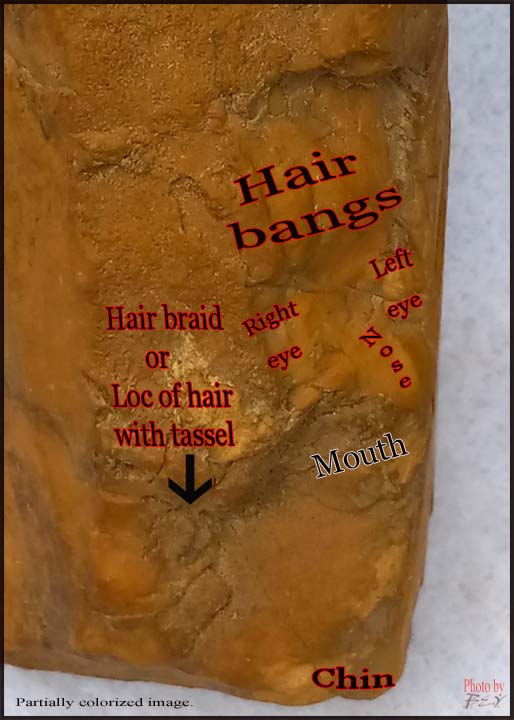
Here he is seen facing rightward. As stated, the bottom lip of the last figure now represents thick, curly, hair bangs covering his forehead. These bangs are connected to a larger organized hairstyle. There is a large loc of hair flowing downward covering the right side of the face and cheek. Notice how it tapers to a beautiful tassel design with a pronounced triangular shaped point at its end. Below the eyes a small, rounded nose is present. The mouth displays a wide smile and is surrounded by subtle black pigments representing a mustache and beard. At first glance this figure’s head appears to be elongated, but that’s not what’s on display here. What you are seeing is a very interesting type of headgear. More specifically, it’s what appears to be some type of uniquely shaped helmet. Did I say helmet 🧐? I did. And not just any type of helmet either. In this example it appears to be a helmet perhaps used for air travel, similar to ones used by military pilots or astronauts. You know, the kind that have a retractable visor opening for the face. Well, let your mind picture that type of helmet. What I’m saying sounds bonkers, right? Perhaps not so much when you consider some of the finer details of what you are seeing. For example, did you pay attention to the well defined border surrounding the face? If you did, you saw that it’s shaped like a square ⏹️. What if this squared border not only represents a facial opening, but also the area where some type of visor was attached? I know how far-fetched the idea seems. Still, keep in mind that one of the images depicted on this stone was an anthropormorphic, flying bird figure. Why does that matter, you ask? Because frequently these stones have a shared narrative or theme amongst the images depicted on them. The principle narrative of this piece just happens to be centered on flying. Now, my most faithful reader, I know what you must be thinking. Some type of headgear… perhaps. A helmet of some kind… kind of a reach, but maybe. But a helmet used for air travel… well, that’s a big pill 💊 to swallow. If I’m being honest, I can fully understand your skepticism, I can🤗. At the same time, because of my deep understanding of the repeated themes found with these stones, I’m fairly certain about my description. Nevertheless, to show you that I’m not simply grasping at straws, I’m going to show you a third image on this side of the stone. It just might aid you to visually and mentally view this piece in its proper perspective. Before that, I have provided partially colorized images of what’s just been described below👇.
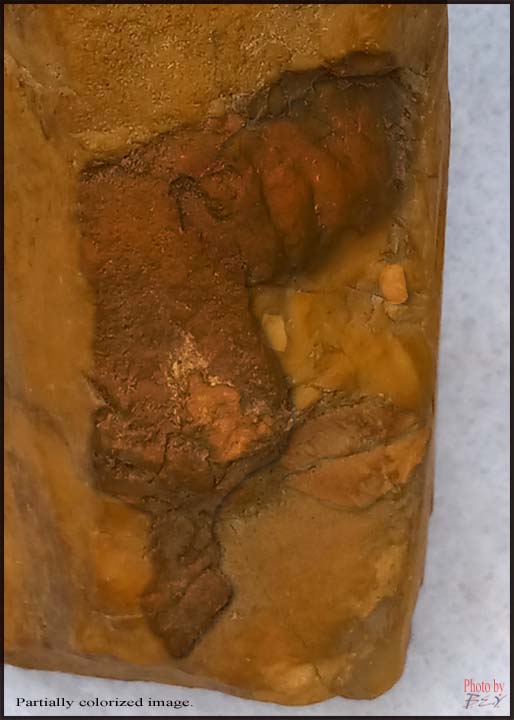
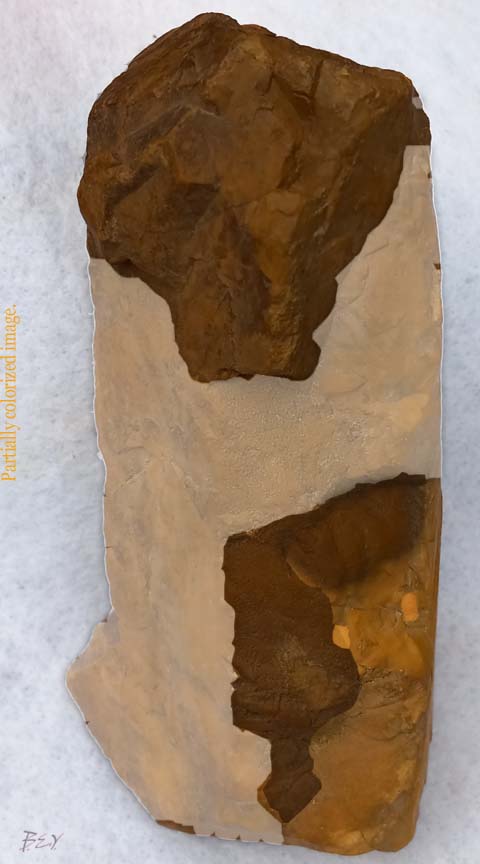
At the top of the stone, and in plain view, another human-like facial depiction is on display. Below you’ll find a close-up of this cunningly designed face. The last picture has been rotated ninety degrees to help you better visualize it.
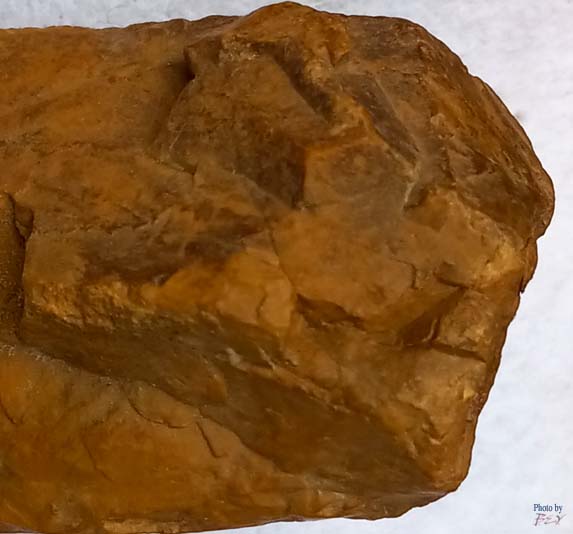
How can we be sure that this is really a face? As always, great question, although it’s one that should not have to be ask. The most obvious answer is that it looks like a face😂. That’s because this face, like that of the helmeted figure, was created using the Simple style. That’s to say that both faces were designed to be easily recognized. Beyond that curt explanation there are the black pigments or banded pattern that is seen. I’ve stated repeatedly that such patterns typically indicate the presence of a face. That was and is an accurate statement. So, now let’s discuss the face that is before you. If you follow the borders of this banded pattern, you will observe that the majority of the black pigments are used to create hair that is fashioned in an organized hairstyle. Her hair, and yes, I believe this is a female representation, begins at the top of her head and flows downward covering the bulk of the forehead. It also seen flowing to the back of her head, seemingly being blown by a strong breeze. The right eye is easily identified because of “the dot” that forms its pupil. Surrounding the dotted pattern, black pigments were used to for the iris of the eye as well as the horizontal “L” shaped eyebrow above the eye. Owing to the way the hair covers the middle and upper left side of the face, the left eye is not visible. Beneath the eyes a regularly shaped nose can be seen just above a mouth that features a smiling expression. Of particular interest is the banded symbol seen directly below the right nostril. It’s located on the upper right corner of the top lip. Here keep in mind two things. First, base or standard symbols can be observed in many different variations. Secondly, symbols can appear in any direction without changing the meaning of the symbol. With that said, what symbol, or combination of symbols, can be seen? I’ll give you a minute to go back and look if you want⏱️ …. Because you have followed along so well, you no doubt understand what we are symbolically being told. If at first you were unsure about the meaning of this symbol, you should have considered its placement value. In other words, what is the symbol seen doing? If you answered, “traveling up the nose”, then you my friend are a real all-star🌟. Similarly, you could have said “being inhaled”. No matter how you say it the meaning is the same. We are symbolically being shown that this person breathed in a mixture of air, bad air, and fragments of Genitrix Symbolum. To reinforce the message, the symbol for air was also placed on the face. It can be found to the right of the nose, just above the bad air (combination) symbol. Another characteristic that lets us know that this facial depiction was created on purpose includes the way the right cheek is formed. In this example, the chubby right cheek is shown with a large dimple. This dimple was created by utilizing the Cut-Away style. Notice how its angular cut helps give the face depth. Also, notice how both cheeks are shown in a raised position helping to create a very gleeful smile.Pay attention to the banded pattern in this section. When you zoom 🔎 in you can easily observe the combination symbol. Here, once again, both the symbols for bad air and fragments were combined. Remember how the last variation of these combined symbols was shown traveling up the right nostril. Now consider this symbols placement value. We are symbolically being shown that the same bad air and fragments that were inhaled through the nose, were also present inside of the mouth. A partially colorized image of the face described can be found below.
Partially colorized image of the face described above.
Having shown you the last face, one important question remains. How was it related to an overall theme of flying or air travel? I’m glad that you asked. To help answer that we’re going to look at the entirety of this stone as it sits in this rotated position.
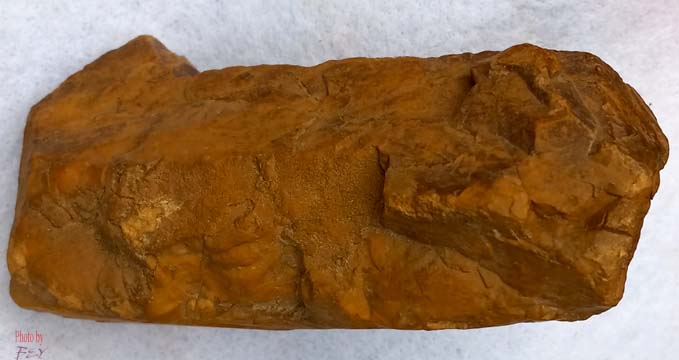
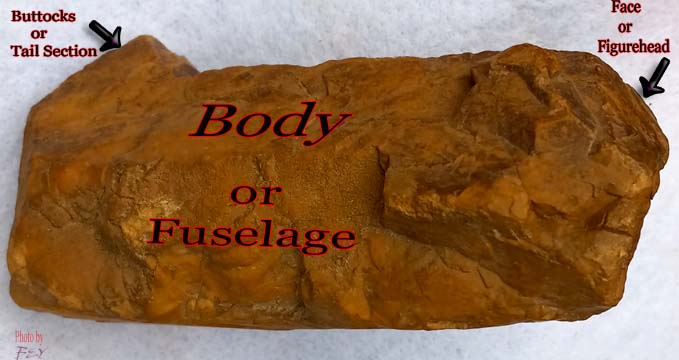
When viewed from this perspective (photo on the left), aside from the multiple triangular points and this stone’s streamline appearance, what do you see? Or perhaps a better question is what does the look of this stone remind you of? To me, surprisingly it has a striking resemblance to a modern airplane ✈️ minus the wings. The face we just covered would form the nose or front of the craft. Similar to an old sailing ship, the face would be akin to a decorative figurehead. For a quick reference, think about the front of the ship seen in the anime cartoon “One Piece”. You know, the one that features the pirate Monkey D. Luffy in his quest to become the pirate king. If you recall, his ship the “Thousand Sunny” has a really decorative figurehead. One that is comprised of a lion’s 🦁 head in the shape of a circle, surrounded by triangular projections representing both the lion’s mane and the rays of the sun 🌞. The section behind the head represents this figure’s body, or if this were an airplane, the fuselage. At the rear of the stone a triangular pointed section is seen. This represents the figure’s buttocks, or if this ere a flying vessel, the tail end of the craft.
Before moving forward, I have a question. Did you notice anything special about the tail end of the stone? Perhaps something geometric… No? I figured as much and as usual I don’t blame you. Don’t forget, it took me almost forty years to know what I know. That’s just my way of saying that when it comes to these types of stones, I know what to look for 🧐. That said, remember how I keep saying that symbols can appear anywhere? Well, if like me you understand how advanced the people were that created these stones, especially in their repeated use of geometry (the fifth science of math), then recognizing repeated geometric shapes is easy. For example, this piece was created with the shape of an irregular pentagon in the tail section.
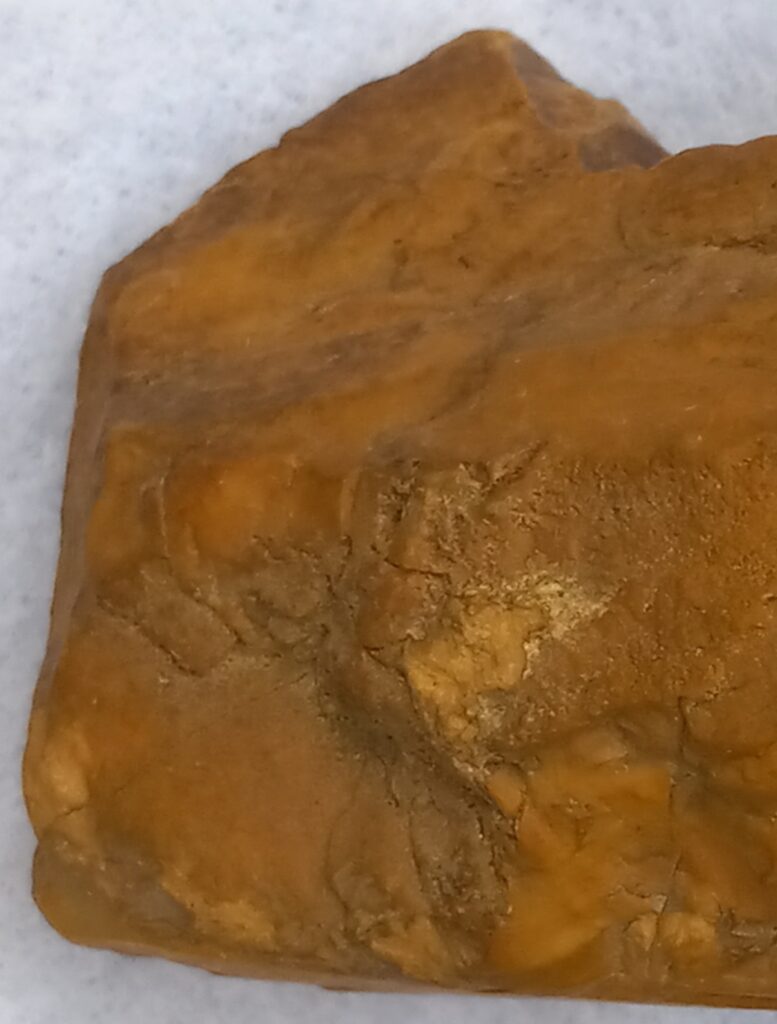
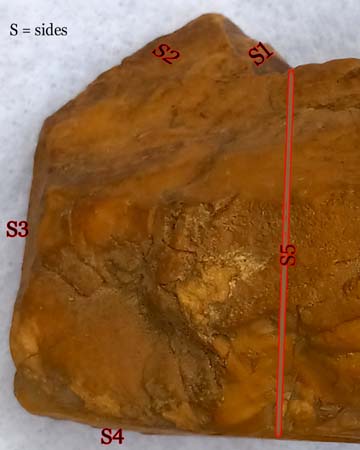
From this perspective we can view four of its five sides (photo on the left). In the photo on the right a vertical bar was added to assist you in mentally visualizing the fifth side. Question… Why was it important for the artist to cleverly place this symbol here? The reason is about to surprise you. If this stone, in addition to being a full body depiction, is also depicting some type of flying craft, and I believe it does, then the irregular pentagon shape takes on a very specific placement value. What is it? In this example, the irregular pentagon symbol is telling us where the vessel was going 😯. Did I just say that🤭? Yes… Yes, I did. Why? Because to the Aha people the irregular pentagon shape or symbol represented an actual place. A place that they believed could be reached via flying. Where is this place, you ask? I already told you back in the first chapter. It’s cosmic! Now, let’s look at the close-up photo once again. Beyond the face that resembles a ship’s figurehead, there are other faces and images present on this stone. Keep in mind that I said that a stone can display multiple images at once. Below you’ll see another example of just what that can mean.
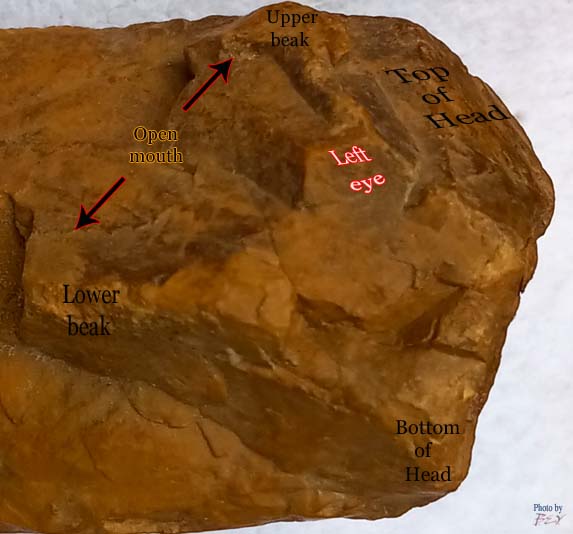
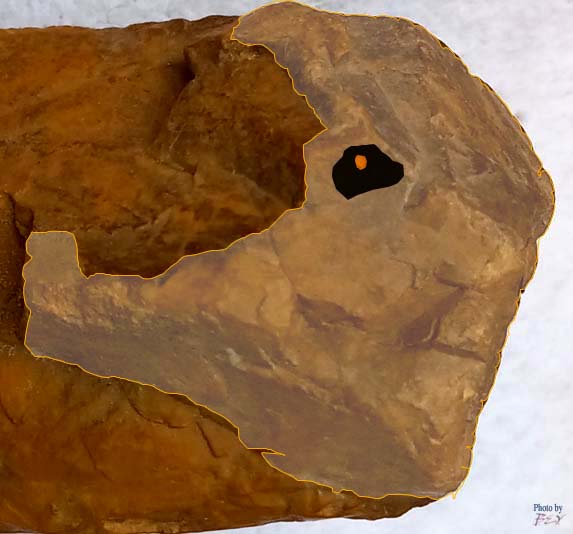
Knowing that many of these stones were created with overlapping images makes undrerstanding them that much easier. Above are detailed and partially colorized images of a large bird’s head that is present on this stone. It’s seen with its beak opened wide with something, or more precisely someone, inside. this large Prehistoric looking bird head shares the same eye as the female figure. Question,… Why do you think the artist incorporated a large bird’s head into the design of this piece? The answer should come to mind quickly. What are birds primarily known for? If you said “flying” then you’re on fire! I’m so proud of you. Now, here’s another, not so idle question… What’s a commonly used nickname by which aircraft pilots refer to the airplanes they fly? If you answered “the bird”, as in the expression “the bird is in the air”, then you my friend are a real rock star! Did you see what I just did there, Rock 🪨 Star ⭐, 🤣🤣🤣. Now, here comes the next image. Do you remember how I said that the Prehistoric bird’s head I just showed you had someone inside of it? Well, below you’ll find a detailed and a partially colorized photo of this person.
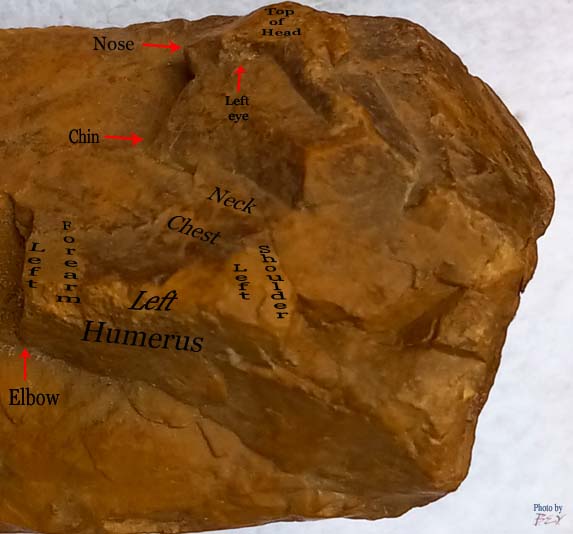
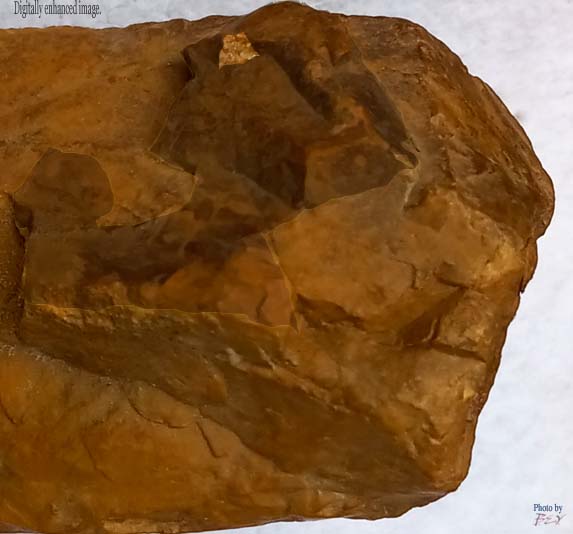
So, what are we seeing? How about we start with the head and face. They are formed by the same misshapen star pattern that formed the right eye of the “grumpy face” figure. The face with the truncated elephant-like nose. The top of the head appears rounded, perhaps bald. The nose is angular and pointed, and the left eye is highlighted by a smidgen of applied contrasting off-white pigments. Below the head we can see portions of the chest, left shoulder, and a left arm. Of special note is the way the left arm is positioned. It bends at nearly a ninety-degree angle towards the front of the body. No well-defined hand is seen, but the knowledge of basic anatomy tells us where it should be located. What’s on display here is the image of a person in a sitting position, busy at work. Don’t forget that I told you that I believe that this stone is intended to represent some type of flying vehicle. Well, that being the case, this person can be said to be one of its crew 🤯. Why would I say that? It’s because the large bird’s head is now to be seen as a type of cockpit in which the person is seated. Also, it’s because of what this figure is presumably controlling with his left hand. I’m not going to reveal that detail yet, but we will definitely circle back to it later. You’ll be thrilled when I tell you, but for now I would like to cover some symbolism connected to this stone. Let’s start with the eye that was used for both the female and bird figures. With the pupil utilizing the repeated “dot” design pattern, did you stop to consider its possible symbolic meaning? If so, did you also consider the possibility that the black pigments that form the iris were also being used symbolically? If so, great because in this example both “the dot” and the black pigments form a symbolic expression. In a previous example, “the dot” was used to symbolically represent the sun. So too with this example. As for the black pigments, they represent smoke. So what is the message or narrative being expressed? The easiest one that we can attach is that this person saw the sun shrouded in smoke. Does that sound familiar? It should because it is reminiscent of a tale told to you before 😉. Next, did you notice anything geometric about the ocular space that surrounds the eye? If not, look again. What you’ll find is an easily discernible trapezoidal shape. Why is this important? Well, I’ve informed you that the trapezoid shape has a specific symbolic meaning, and it does. Now, I’ll give you a hint about what that meaning is. When the shape of a trapezoid is seen in conjunction with a facial, or full body depiction, this geometric symbol indicates that the individual depicted was a part of, or associated with, a certain class or subgroup of people. Got it👍? Nope 😑. You don’t say😅. Was my hint somewhat vague 🤔? Yes, I’m sure it was, and intentionally so. For now I just need you to think a little. Why, because if the Aha people had distinct subgroups or classes it would show a type of social stratification in their society. A type of stratification, I might add, indicative of an organized culture and civilization.
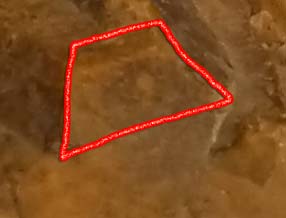
Trapezoidal border surrounding the eye. Close-up and highlighted.
I need to pause and say something here. As amazing as the last images were, I want to make it abundantly clear that I’m not asserting that what you just saw represented a real, fully functional, ancient flying vehicle. We’re clear on that point, right? What I am saying is that ancient civilizations throughout the world had stories that referenced flying vehicles or craft. Within that context, it’s not outside the realm of possibilities that the Aha people shared similar stories or had similar beliefs. The fact that this particular stone in some ways resembles a modern airplane, minus the wings, may be one big remarkable coincidence. Or maybe, just maybe, some of the many ancient stories and “legends” of flying boats, flying chariots, flying wheels, flying vimanas, and other types of flying craft stemmed from something real, something that the ancients actually witnessed. You would and I would be derelict in our thoughts about the unknown past if we didn’t, at a minimum, consider the possibility. That said, when combined, what are the last images telling us? As a narrative it would be something like this… “We were excited to be flying high in the skies above. We were equally happy to be journeying to “irregular pentagon”. Then, before we knew it, we were engulfed in bad air and exposed to jagged stone-like fragments. Looking out, we could see the sun seemingly shrouded in smoke”. I know how that story must sound, I do🤗. But it might not seem so odd once we get to the end of this chapter. For now, we will shift gears and discuss more interesting images depicted on this stone.
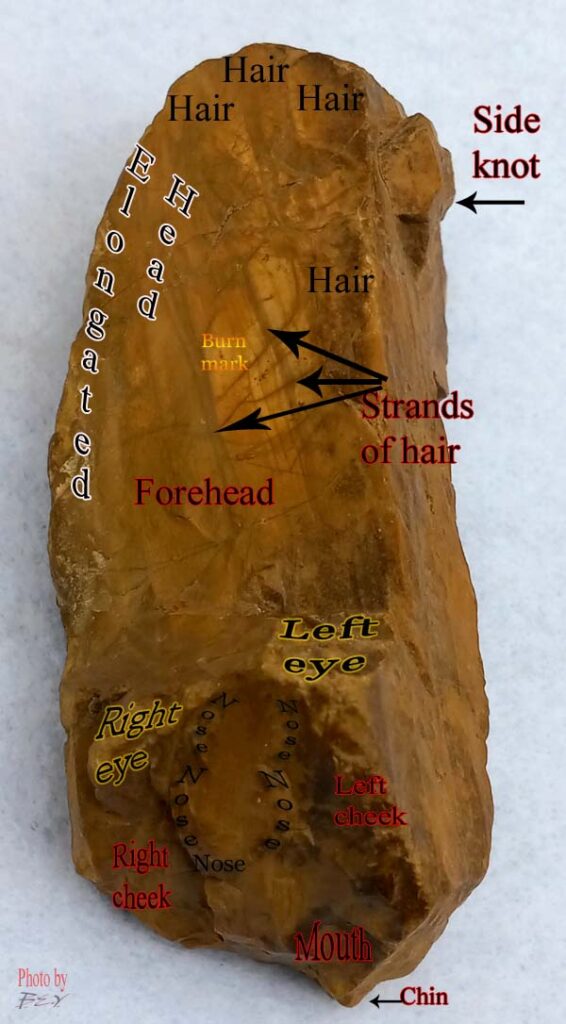
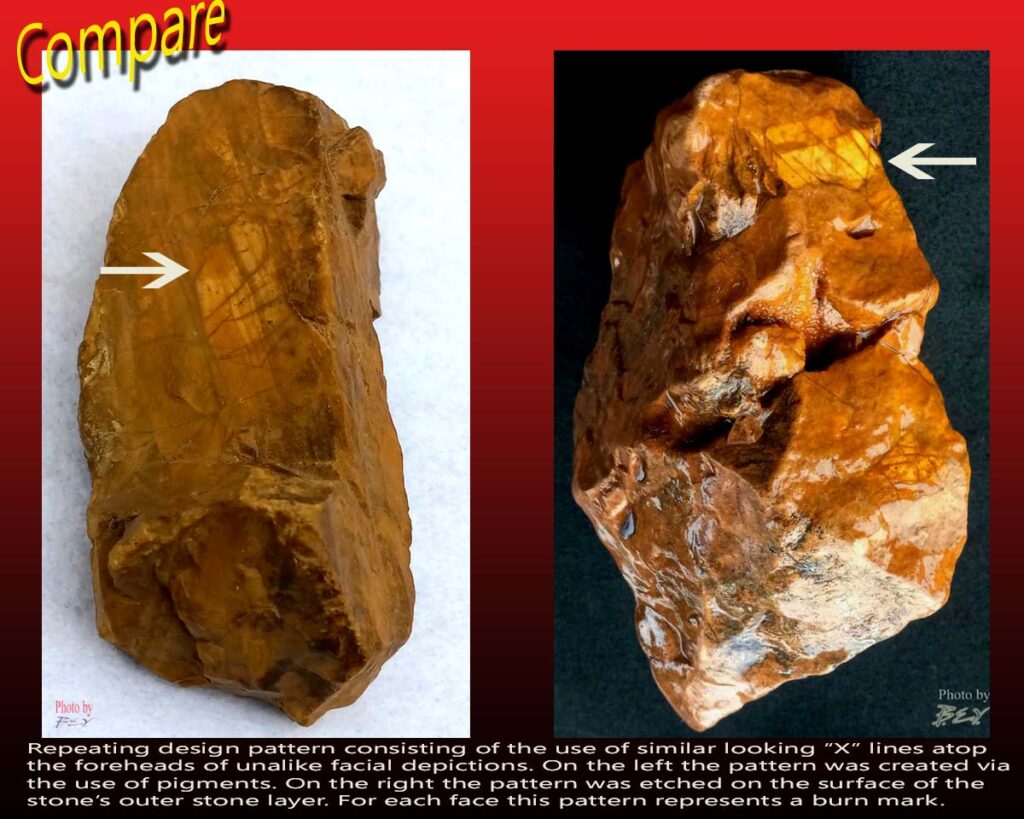
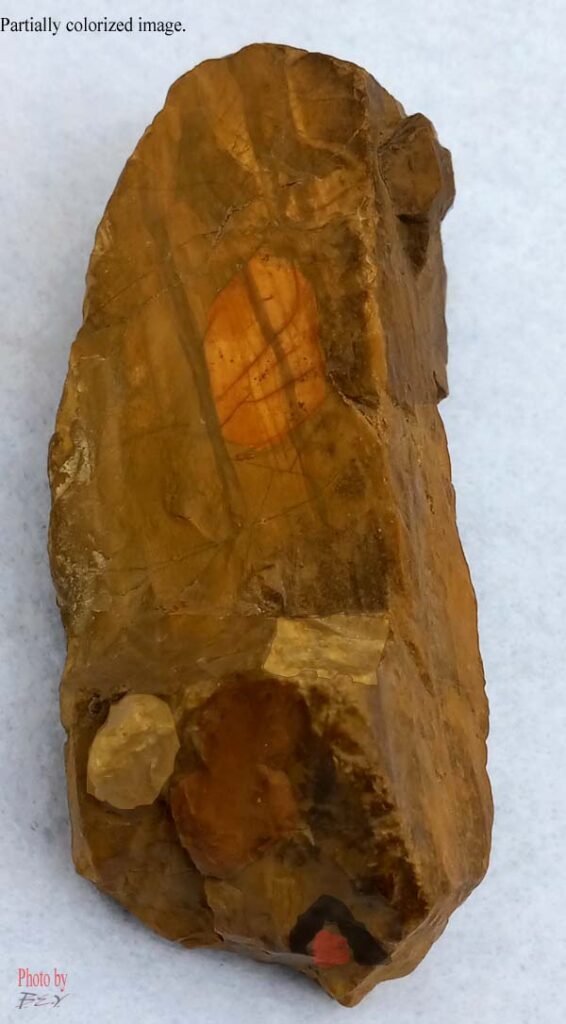
Turning the stone to another side reveals yet another face. This one also appears to be a human. She is seen facing forward. Her elongated head is tilted to her right as she looks left and upwards 👆 towards the sky. Her face has the appearance of being mature, but not quite elderly. The eyes 👀 are constructed on two geometric planes and were created using the Gouged or Scooped style. Separating the eyes, a large, double rounded, nose👃is seen. It is comprised of an upper and lower part, with the latter being the largest. Below the left nostril traces of black pigments are seen. What does their placement value tell you? Additionally, black pigments were used to create the outline of an open mouth. Upon inspection you’ll find this pattern also contains spikes. What does their presence tell you? If you were able to answer the last few questions posed, then this figure’s story or narrative is easy to interpret. What is it? Simple. When she looked upwards, fragments of Genitrix Symbolum damaged her eyes and created a deep wound to her left cheek. These same fragments, coupled with bad air, were subsequently inhaled through her mouth and nose. She also suffered burns and a deep wound to her head. How do we know? Again, simple. Do you see the light spot at the top of her forehead? It’s the spot that has lines that resemble etched “X’s“. Well, that represents the flesh beneath her skin or the epidermis layer. I showed you the same type of design pattern before. It was in relation to an anthropomorphic bird-like figure. Then and now this lighter hued “X” pattern provides the same intended meaning. How’s that for repetition? Below you’ll find a photo with a side-by-side comparison as well as a partially colorized image.
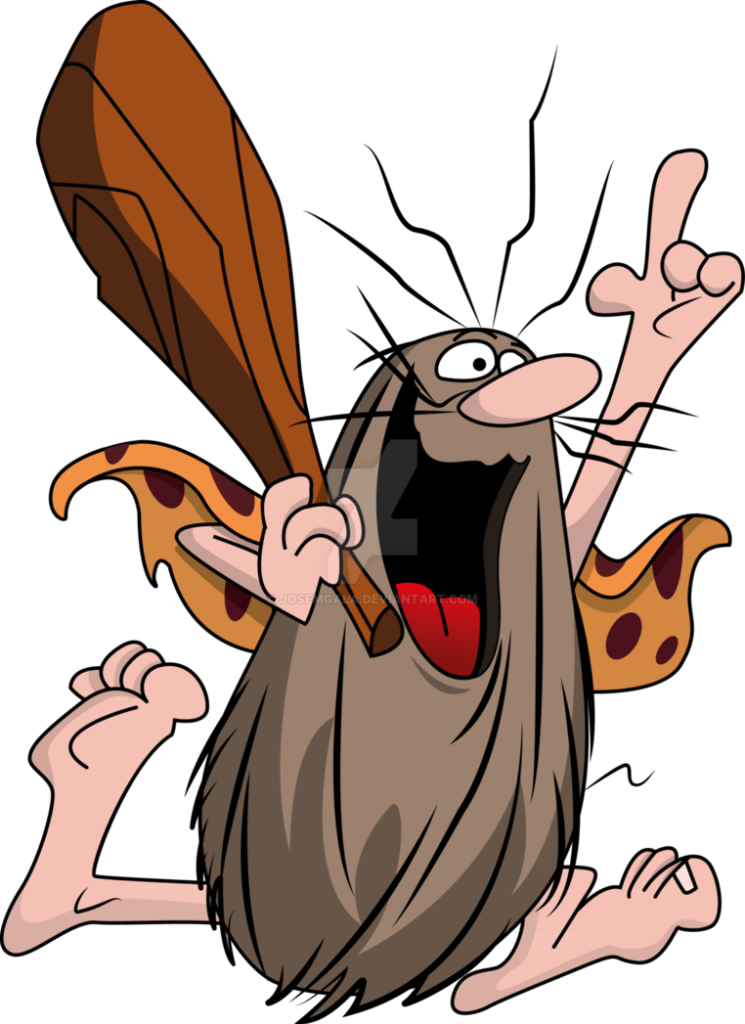
As wonderful as the last image was, there is another figure being depicted on this side of the stone. In order to fully appreciate this image, I need you to think about two things. The first, think of the stone’s tannish-brown color as being hair. And by hair, I mean a lot of hair 😅. Next, as crazy as it seems, think about the Hanna-Barbera character “Captain Caveman”. Well, minus the wooden club and animated demeanor. Or, in a very real human sense, think of a person that has Ambras or “Werewolf” syndrome. A genetic condition that causes the body to over produce hair.
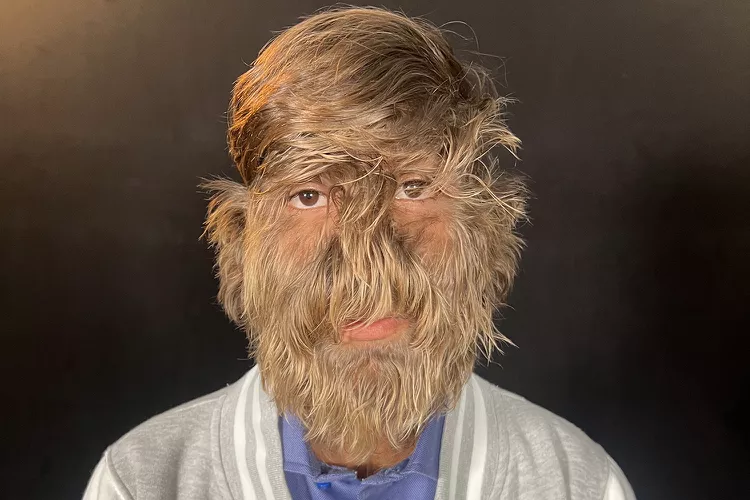
Now that you have a mental frame of reference from which to work, let’s look at the next image👌.
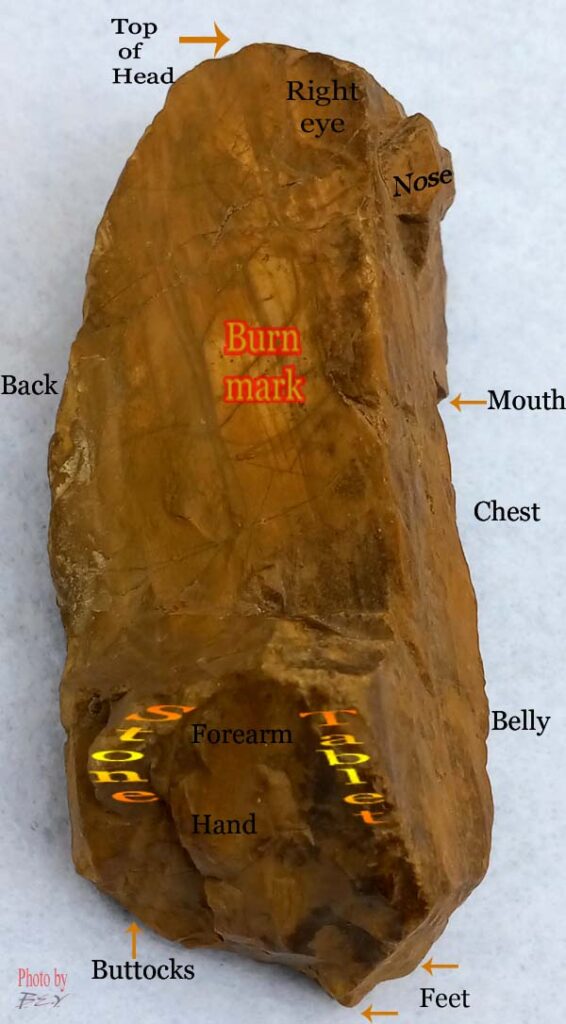
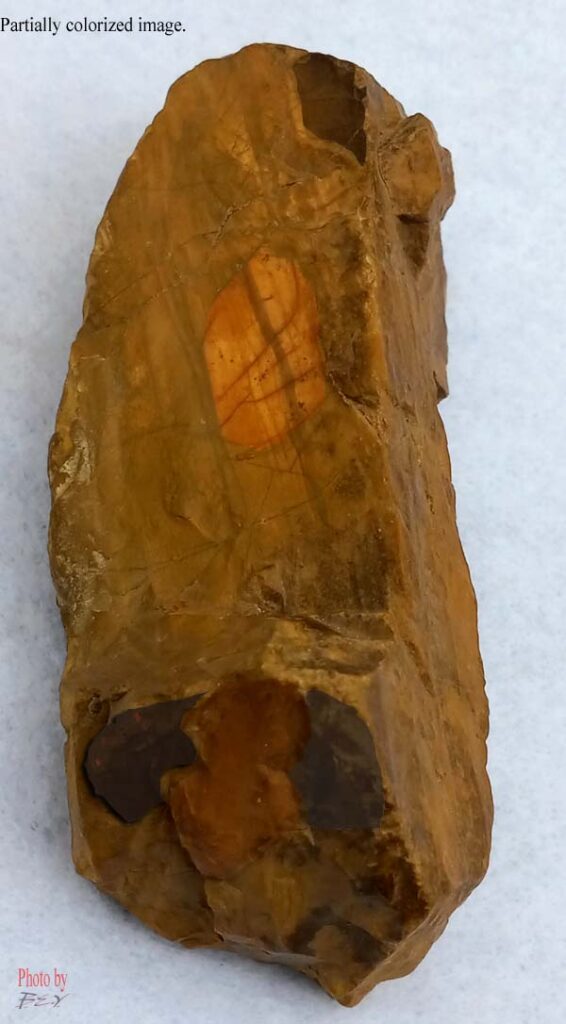
Changing the perspective ever so slightly, now we have another full body depiction on display. This figure’s body is completely covered by hair and is seen with a gouged right eye. He has a button nose, flat chest, and rounded belly. If this stone were in an upright position, then he would be seen standing with something akin to a stone tablet underneath his right arm. The stone tablet is curved at its top and squared at the bottom. From this perspective the tablet appears to be damaged. Why do I say that? It’s because what you’re looking at is this hairy fellow’s “after” image. How do I know? Because it symbolically shares the same burn to the skin as the last figure. An injury that occured after looking up. Don’t believe me do you? Well, how about I show you his “before” image?
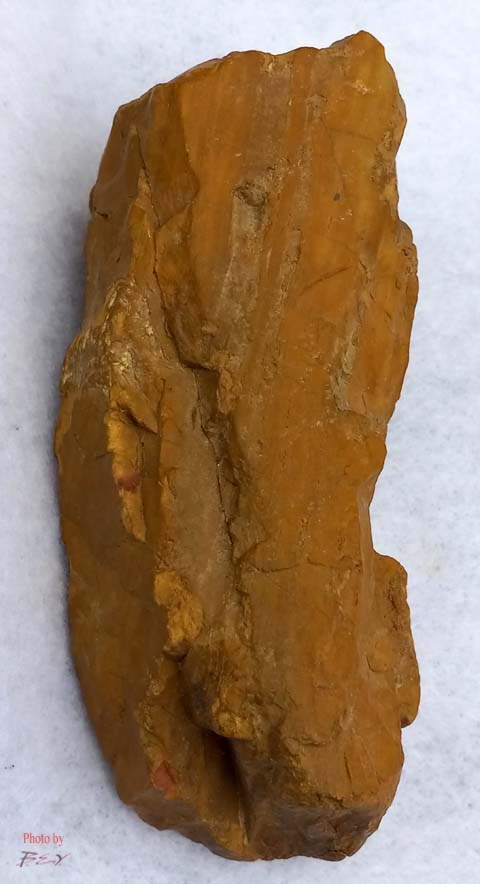
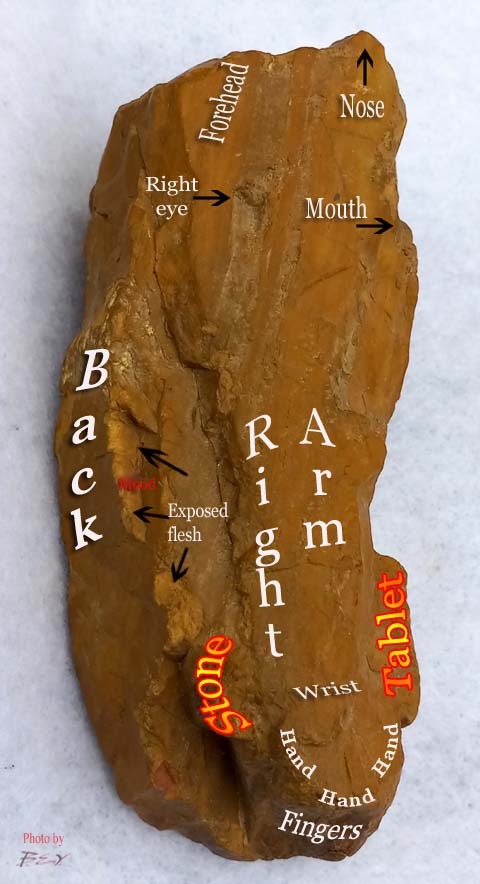
In this picture we can see the “before” image for the hairy male figure. The easiest built-in orientation point from which to start is the noticeable contrast in colors. In this example, there is a black banded symbol that sits atop greyish-white and lighter black pigments. As you know, such a contrast almost always represents an eye. As you analyze the eye, you can observe that it is not just a blob of pigments, but that it forms a variation of the Genitrix Symbolum symbol. In this variation, the symbol is seen with the characteristic three spikes at its top with a pointed bottom. From the symbol’s placement value, we now know what our hairy friend saw 👏🏼. His small, round, button shaped nose is upturned, and his mouth gives the face a somewhat inquisitive expression. From this angle we can see his right arm, again with what appears to be some type of rounded stone tablet underneath. Here its curved top and squared bottom appear to be more intact. On the backside of the body there are sections displaying a lighter hue in the outer stone layering. This represents areas where the thick hair has been burned away by exposure to intense heat. In these two areas, traces of red pigments have also been used to symbolically represent blood. So, what story or narrative are we being presented with? Well, it’s similar if not exactly like the stories I’ve already shared. We’re being told that the moment that he looked up, his body received burns and other wounds. His “after” image that was previously shown, merely illustrated how extensive that damage was. Now here’s a question… Why do you think this figure is pictured holding a stone tablet? You did think about that, right? So, as one possible answer, I want you to consider the following. What if what we are seeing, in the guise of this hairy figure is, or rather was a student? You know, as in someone attending a school. If that were the case, then one might imagine that the stone tablet was the equivalent of an ancient notebook. Interesting thought, huh 🤔. I’ll do you one better. What if we’re not just being shown a student, but a student that was either in route to school or perhaps on a field trip? I could easily tell you how these questions aren’t just an abstract possibility. To do that however, I would have to embark on telling you about “The greatest story never told” 🤫. But, since I’m not going to do that now, what I will do is pose another question. What if Ambras or Werewolf syndrome, although relatively uncommon now, was not so uncommon in ancient times? In other words, what if at some point in the history of our planet, this genetic trait was not rare, but was common? If that were the case, then the hairy figure depicted might not seem so odd. Just a thought ☺️.
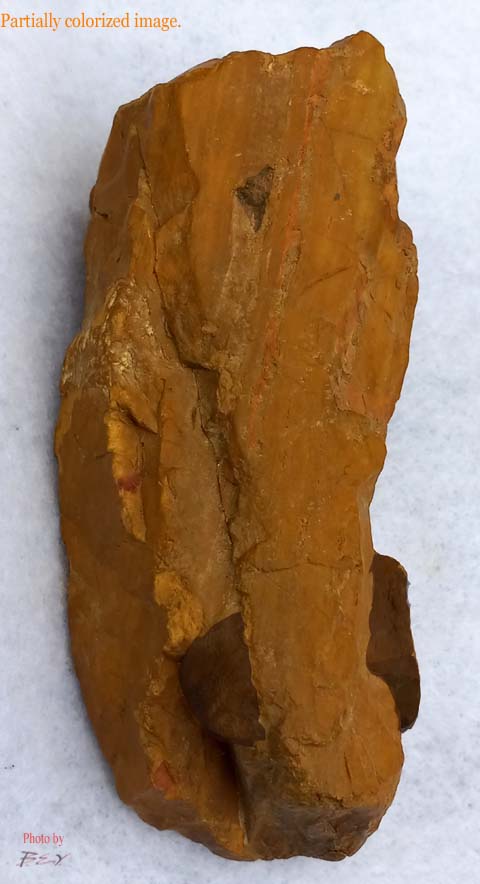
Partially colorized photo of the hairy figure described.
Would you like to see another image? I thought you might. So, let’s not waste time and get straight to it. The good news is that the only thing we’re going to change is our perspective in viewing this stone 😉.
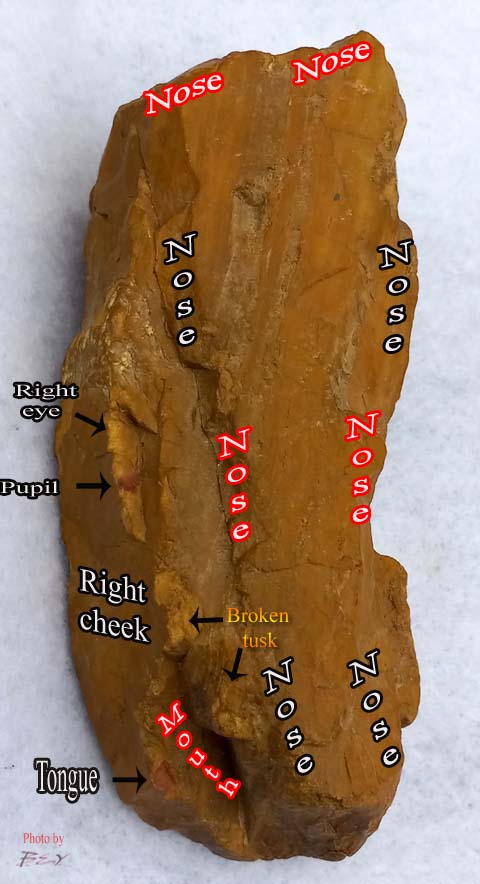
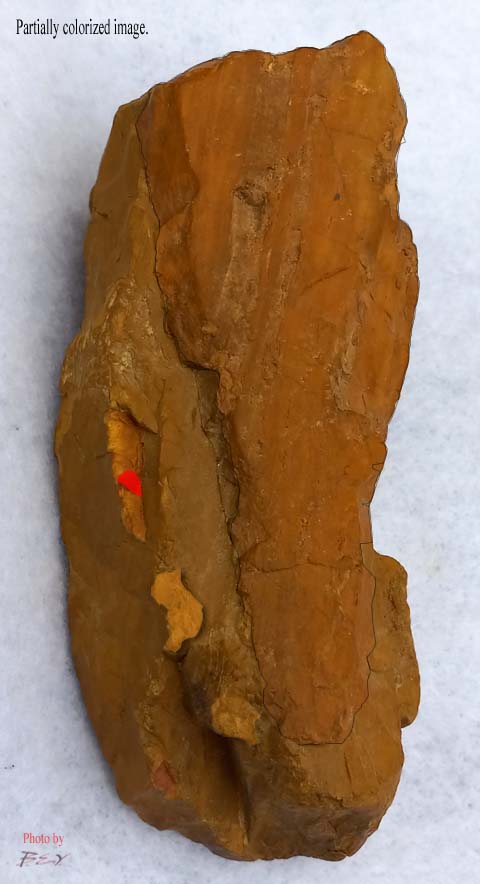
This face presents us with another figure that boast an elephant-like nose. Unlike the truncated nose of the “grumpy” face figure, the nose seen here is large and robust. It extends the full length of the face. The head is seen rotated slightly to the left and from this perspective only one eye, the right, is visible. This eye is easily identified because it is composed of lighter hued outer stone layering topped with red pigments. A portion of the same red pigments that were previously used to indicate blood. Below the right eye, the remaining lighter hued areas of the outer layer now represent a tusk, or more specifically a fragmented tusk. You’ll no doubt notice that this lighter colored layer gets smaller and trails away from the base of the tusk in a slightly linear fashion. At the distal end it connects to a small area that also contains red pigments. This pigmentation now, once again, represents blood. If you look below the upper part of the tusk, just under the bottom of the curved section of the stone, you’ll find the secondary piece. It too is represented by a contrast in the outer stone layering. What we are being visibly shown is that this figure sustained an injury that fractured its tusk thereby causing it to break off and bleed.
With all that said, I’m sure that one big question is floating around in your head. How do I know that I described the last face accurately? It’s in part because I know that anthropomorphic elephant figures are commonly depicted amongst these types of stones. And, when you think about it, anthropomorphic is about the only way you could classify the last face. Coupled with that is the fact when these types of anthropomorphs are seen, frequently they also exhibit broken or fractured tusk. Seem strange? Perhaps not so much when you know that Lord Shiva’s elephant headed son Ganesha is also known as the “Lord of the one broken tusk” 🤯. Again, not saying that the images found on this stone are in anyway connected to the ancient “legends” of Shiva. What I am saying is that maybe, just maybe, a small element of commonality is shared between the two 💭.
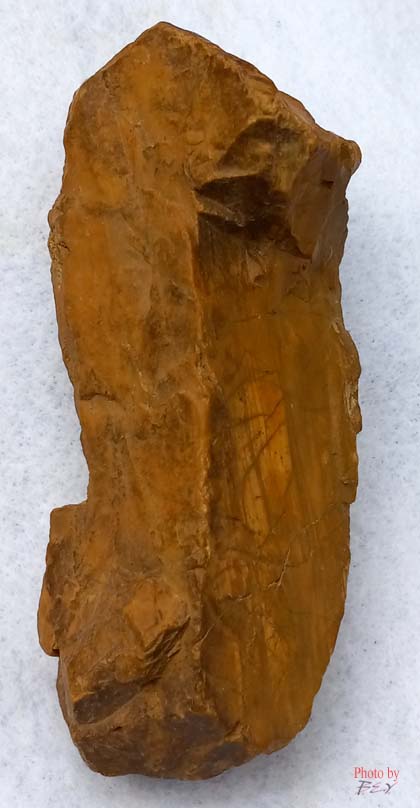
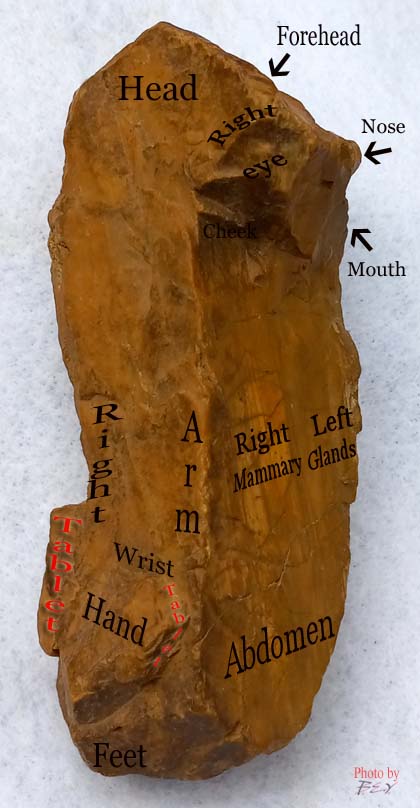
In the photo above is another hair covered figure, this one female. She is seen facing rightward 👉. For the built-in orientation point we are not going to use contrasting colors, but instead a repeated design pattern. You did see it, right? If not, go back and look again at the shape of the right eye. Does it look familiar? It should because I’ve shown you examples of eyes shaped like this before🤗. Like her male counterpart she has a small, round, button shaped nose. She shares the same Cut-Away styled cheek as the female figurehead figure seen a little while ago. Her mouth is turned downward giving her an almost frown-like expression. And why not be upset? Afterall she is pictured with her right mammary severely burned🫨. Like the hairy male figure, she too is pictured with a stone tablet like object beneath her arm. Could she also have been a student of some kind? On the back of her wrist and hand black pigmentation is seen. Analyze this pattern and consider what if any symbols are present. If so, consider its placement value.
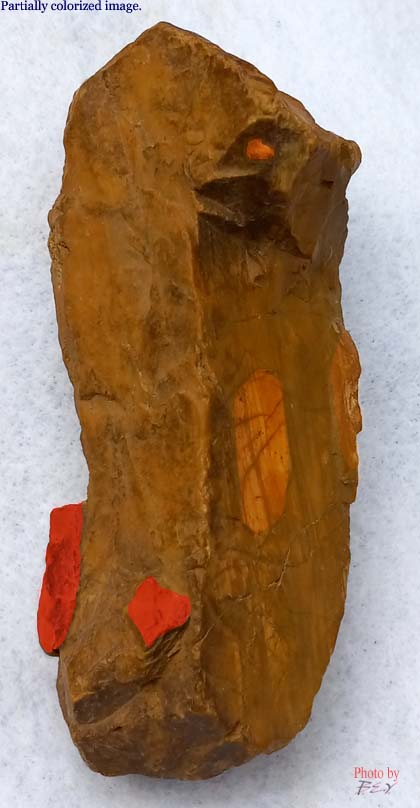
A partially colorized image of the hairy female figure described above.
Having been shown the partially colorized image above, were you able to recognize any additional facial depictions? If not try the following. Think of the areas now highlighted by colors as representing eyes. If you’re successful, you’ll be able to discern two separate faces. One is a human female, with large eyes and missing a mouth, facing right 👉. The other is a not so human figure, with an elongated head, angular nose, and somewhat reptilian appearance facing slightly forward and to the left 👈.
Do you want to keep going? You do👍. Great, let’s continue then, shall we.
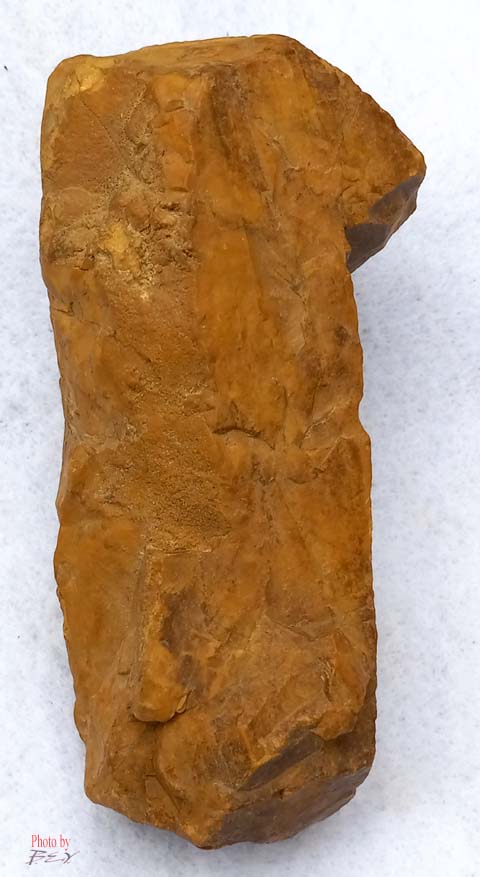
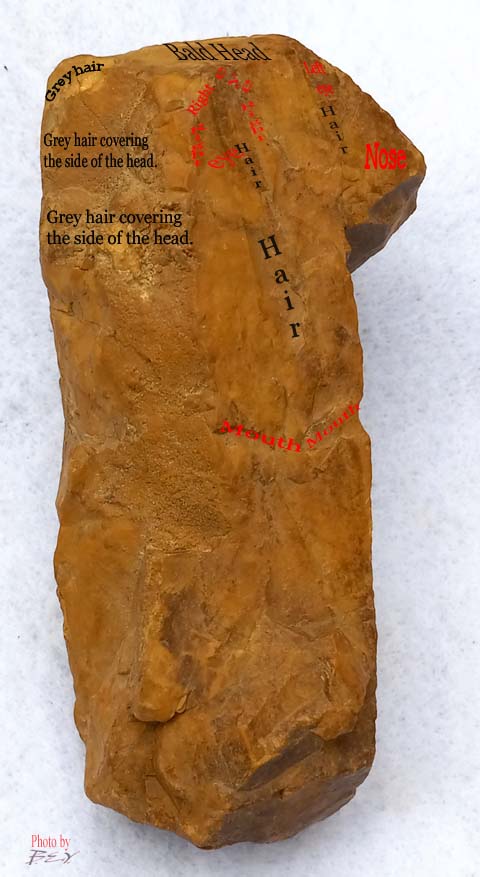
With a turn of the stone and a change in perspective, the face of an elderly human man comes into view. The top of his head is bald, but patches of grayish-white hair adorn the side and back of his head. His eyes are created by light black pigments. They can be found just below the brow of his head. Because the black pigments used for the eyes have been overlapped by darker black pigments that represent strands of hair, if you give the image a cursory glance they could easily be missed. However, if you take the time to analyze 🔎each eye, you will find that the pigments used for each one has a defined shape. This figure has an angular shaped nose, and his mouth is seen with a partial grin or smile.
That was a pretty good description, I think, but I omitted something ☺️. From this perspective, it’s not just a face that’s on display, but another full body depiction. Below you’ll see a detailed photo of the full body as well as a partially colorized image of this figure.
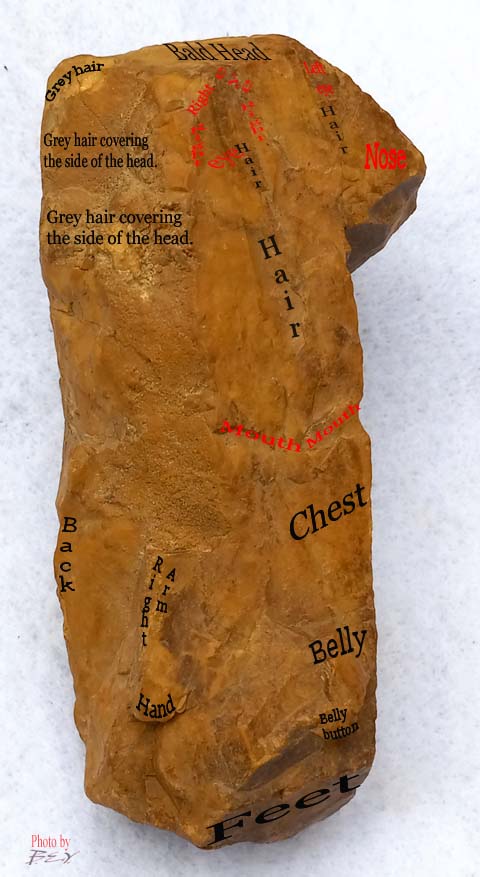
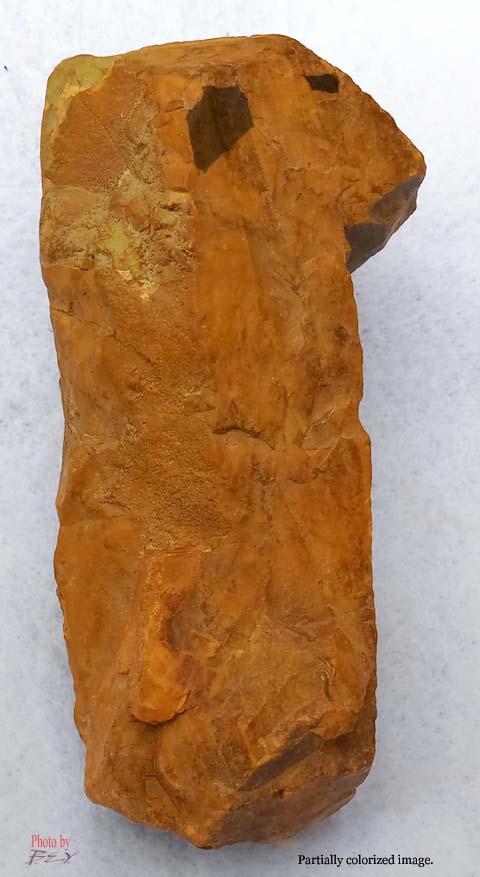
Believe it or not, there are several more faces and full body depictions on this stone that I can show you. But in the interest of time, I’ll limit it to just a few more. These last images that I’m going to cover should place a nice little bow on somethings that I covered earlier.
We are still updating this post by adding audio and addressing errors in the text. If you would like us to work faster, there are three ways to motivate us: 1. Take the survey (it takes less than a minute or two), 2. Leave a comment (you don’t have to use your real name or e-mail. I’m not trying to contact you), or 3. Hit the link and donate. Don’t forget, if you like what you have seen and read, please share 🚩or bookmark ⭐ this site. Thanks, and see you soon ☺️.
This site is awesome! Great resource for understanding these stones. It’s about time for people to take these stones seriously. Thanks for putting out the content.
Thanks for the wonderful comment. I think the site is great too, but I’m biased 😂. Please be sure to visit again. And thanks again.